For anyone holding funds on a trading platform, disabling withdrawals through an API key does not necessarily prevent a loss. As reported on November 18, 2026, an incident at decentralized perpetual futures exchange Lighter illustrated how a compromised key could affect funds without making a direct withdrawal.
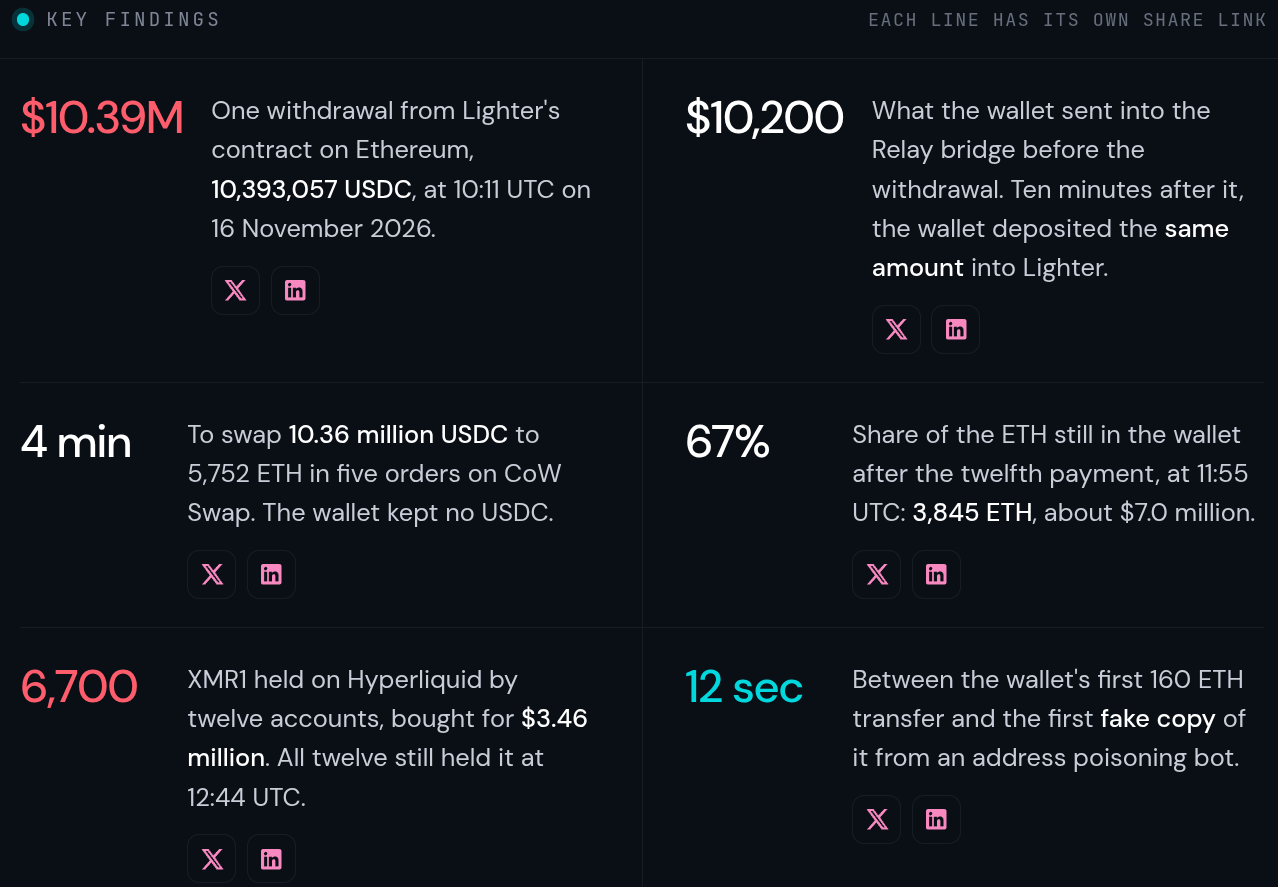
According to Lighter’s postmortem, an attacker used compromised API keys to move funds into a public pool, then redeemed shares held through another account. Bitquery traced a withdrawal of 10.39 million USDC. Lighter said its protocol and smart contracts were unaffected. The exchange later restored deposits and withdrawals and returned about $5 million in USDC to the affected trader.
Lighter now requires wallet signatures for transfers into public pools and has made API-key signatures non-public. It also plans IP allowlists and configurable permissions for individual keys; those planned controls should not be mistaken for measures already in place.
The practical lesson is to consider what an API key can do, not just whether it can withdraw. Account access, trading permissions and the ability to move capital into a shared pool can all have financial consequences. As Lighter put it: “A key that can trade can still lose you money if someone else holds it.”