Holding bitcoin, selling it for cash, or borrowing against it are different choices, and a mining company’s weekly update can show which one it actually took. In a report published November 24, 2026, Bitcoin Magazine said Bitdeer sold every bitcoin it mined in the latest week and still held none of its own, extending a stretch of turning production into cash after a weekend drop in the bitcoin price.
Bitdeer, which the report described as Singapore-based, reported output of 281.1 BTC and sales of 281.1 BTC for the week, for a net addition of zero. Its pure holdings, a figure that excludes customer deposits, were zero as of November 20. That is a reported treasury balance, not a claim about customer coins and not a template for a personal wallet.
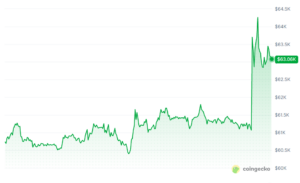
The sales came as bitcoin fell. Bitcoin Magazine Pro data cited in the report put a weekend low at $55,106 early Saturday, November 21, 2026, at 1:17 a.m. ET. By 11:23 a.m. ET on Monday, November 23, the price had bounced to near $62,700, and the report said it was still near $62,700 at the time of writing. Those are observed prices in the article, not a forecast.
The reserve was already gone
Bitcoin Magazine described the week as part of a nearly year-long pattern of converting mined bitcoin into cash. It reported that Bitdeer’s treasury shrank from roughly 2,000 BTC at the end of 2025 to zero by February 20, 2026, when the publication said the miner had liquidated its reserve over eight weeks. At that time, the company said the move should not be a concern for the broader market.
Filings since then show how little it kept. In third-quarter results filed with the U.S. Securities and Exchange Commission on a Form 6-K on November 10, the company listed 47 BTC held at September 30, down from 2,029 a year earlier. Its September production update showed 61 BTC held at the end of August. It still mined 1,355 BTC in September and 3,855 BTC in the third quarter, compared with 1,109 BTC in the third quarter of 2025. On the figures in the report, higher production did not mean those coins stayed in Bitdeer’s own holdings.
Margins, cash, and a buyback authorization
The same quarterly report showed a larger fleet and thin self-mining economics. Self-mining hashrate reached 82.3 exahashes per second in the third quarter, up from 35.0 a year earlier, with another 28.7 exahashes per second of co-mining at third-party sites.
Self-mining generated $217.5 million in revenue in the quarter but only $6.2 million in gross profit. Electricity averaged $47 per megawatt-hour, and the fleet ran at 15.4 joules per terahash. Bitdeer posted what the report called record revenue of $320.7 million and adjusted EBITDA of $69.6 million, but a net loss of $125.5 million. That result included a $54.6 million non-cash loss tied to a bitcoin-collateralized loan from a related party.
Separately, Bitdeer reported $213.7 million in cash and restricted cash, and its board authorized a new $100 million share repurchase program on October 8. The report does not say that authorization had been completed, and it does not tie the buyback to any personal holding plan.
Pledged coins are not the same as free coins
The report also described miners that were not simply emptying a treasury. American Bitcoin, which is majority-owned by Hut 8, secured a $150 million revolving credit line from FalconX on Monday, November 23, backed by its bitcoin. The company said the facility lets it raise cash without drawing down its reserve. The loan carries a 5.95% fee and an initial collateral ratio of 143%. Fully drawing it would require about $214.5 million in pledged bitcoin.
American Bitcoin had not said whether it had drawn on the line. Its release lists the risk that pledged coins could be liquidated if prices fall. On its November 4 earnings call, the company said it held 8,427 BTC at the end of September. It has also sold part of its production to cover operating costs.
That is the trade-off the source actually supports. Matching sales to a week’s mining, as Bitdeer reported, turns new coins into cash and leaves pure holdings at zero. Borrowing against bitcoin can raise cash while a reserve is still reported, but those coins are collateral, and the American Bitcoin release warns they can be liquidated if the price falls. A published holding figure does not, by itself, say the coins are unpledged.
Other miners had sold coins outright. The report said MARA sold 13,597 bitcoin earlier in November 2026, describing miners with thin margins as turning to their treasuries for cash. That is the article’s account of what had already happened, not a projection.
No stated plan to rebuild a stack
Shares of Bitdeer, ticker BTDR, were trading near $3.44 at 11:23 a.m. ET on November 23, up about 16% from Friday’s close of $2.96. The stock ranged from $3.26 to $3.71 that day. Bitcoin Magazine linked the move to a broad market rally that lifted bitcoin-linked stocks after Nvidia reinstated CEO Jensen Huang. The share snapshot is not evidence that the zero treasury caused the gain.
Bitdeer has not said whether it plans to rebuild a bitcoin position. It said in February that selling was a liquidity measure tied to evaluating powered land acquisitions and scaling its infrastructure. The company is also shifting toward AI cloud services, and it reported an AI cloud revenue backlog of about $2.9 billion in its third-quarter release.
For a reader thinking about long-term holding, the limited check in this report is whether coins a company says it holds are free of a pledge, whether new production is being kept or sold, and whether loan terms can force a sale if the price drops. Bitdeer’s update put its own pure holdings at zero as of November 20, after sales matched that week’s 281.1 BTC of mining. That corporate result does not describe a personal custody arrangement, and neither selling, holding, nor pledging removes price or operational risk.