
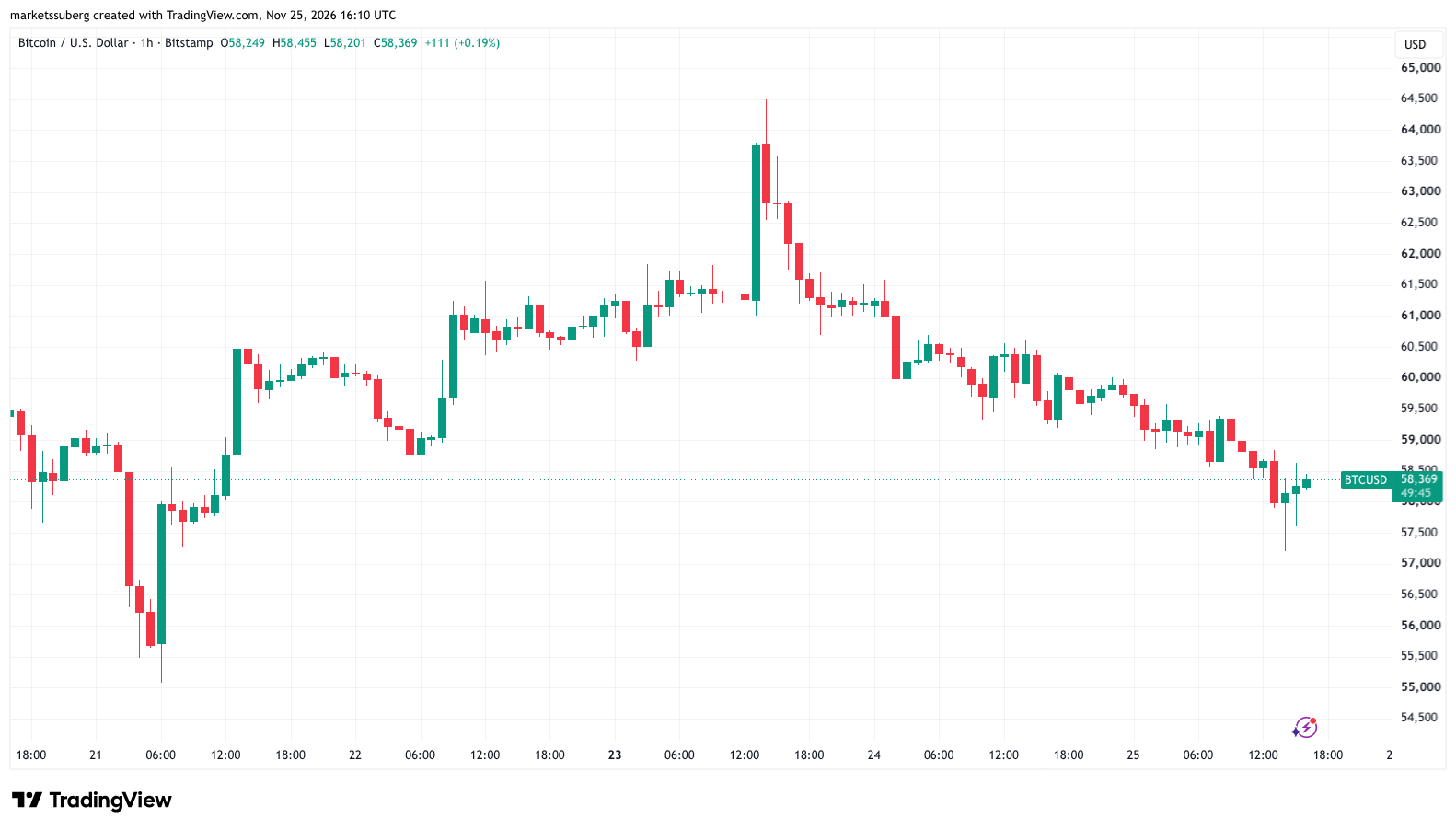
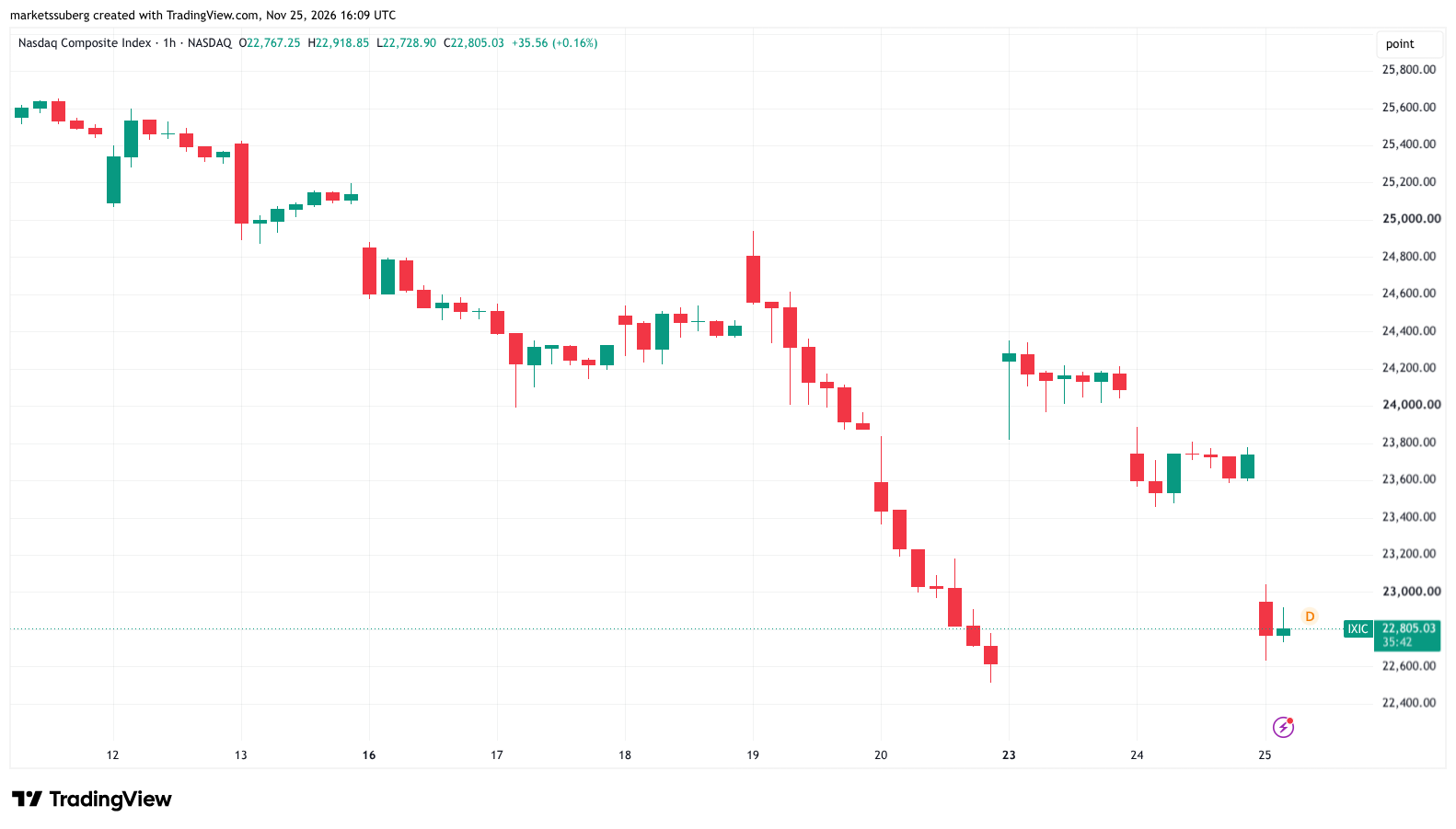
Bitcoin traded as low as $57,209 on Bitstamp on Nov. 25, 2026, down as much as 4.2% on the day, according to TradingView. US stocks also fell as traders weighed a higher-than-expected core inflation reading and the prospect of higher tariffs. By 4:30 p.m. UTC, the Nasdaq Composite was down 4.2% at 22,632 points, while the S&P 500 was down 2.7%.
Across crypto markets, $512 million in positions were liquidated over 24 hours, according to CoinGlass. Long positions accounted for $416 million of that total.
Inflation and the December rate decision
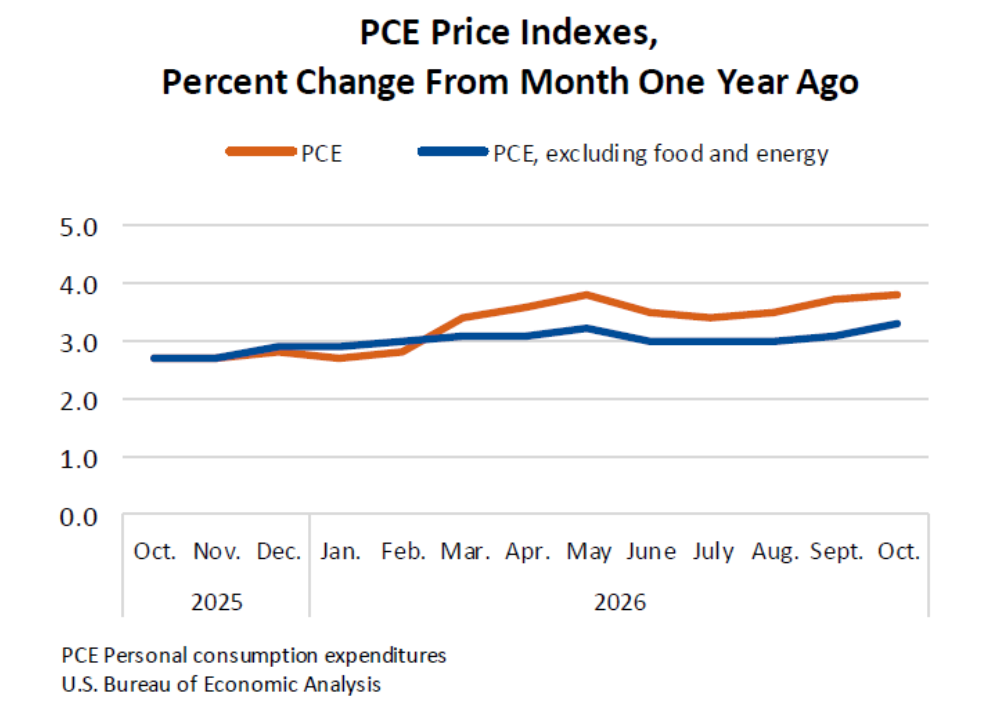
The US personal consumption expenditures (PCE) price index rose 3.8% year over year in October, the second-highest reading since April 2023. Core PCE, which excludes food and energy prices, rose 3.3%, compared with the 3.2% expected.
Markets had already expected the Federal Reserve to raise rates by 25 basis points in December. Economist Mohamed El-Erian said the latest data would leave markets viewing a Dec. 9 increase as “essentially a done deal.” That was an assessment of market expectations, not a Fed decision. On Nov. 23, El-Erian had called a larger increase “ill-advised for both economic and financial reasons.” Fed Governor Christopher Waller had indicated the previous week that he would support a 50-basis-point move.
The tariff increases also remained proposals. US Trade Representative Jamieson Greer told CNBC that the proposed rates generally ranged from 15% to 20%. He described the net increase as a “top up” of a few percentage points and said it would take months to take effect.
Bitcoin’s relationship with the Nasdaq
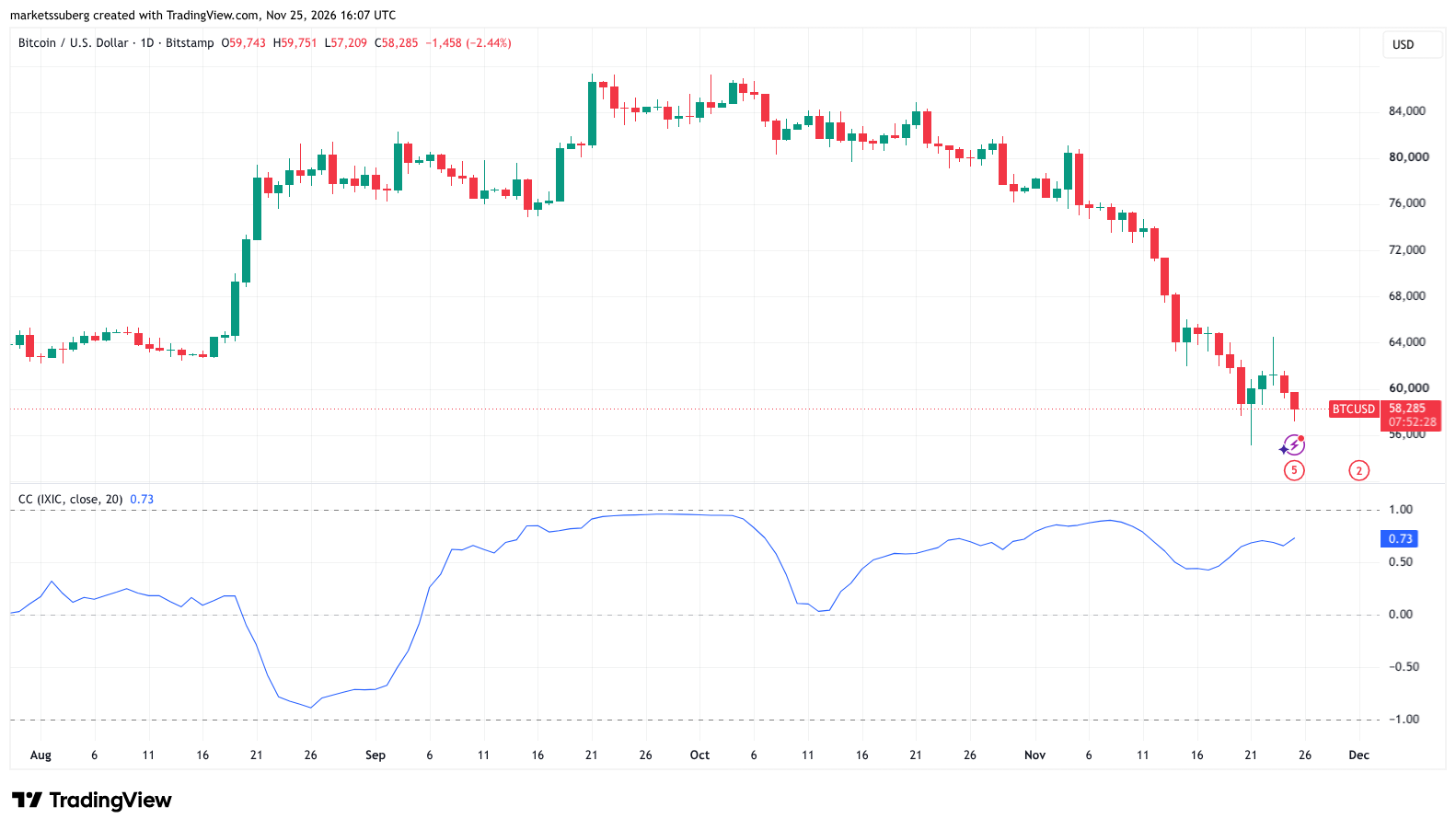
Bitcoin’s correlation with the Nasdaq had remained positive since early September and stood at 0.73 on Nov. 25. Trader and analyst Michaël Van de Poppe attributed Bitcoin’s weakness to the Nasdaq decline and suggested that the Nov. 27 options expiry might be adding pressure. Despite the drop, he wrote on X that his main scenario was a rebound to $68,000–$72,000 within one to three weeks.