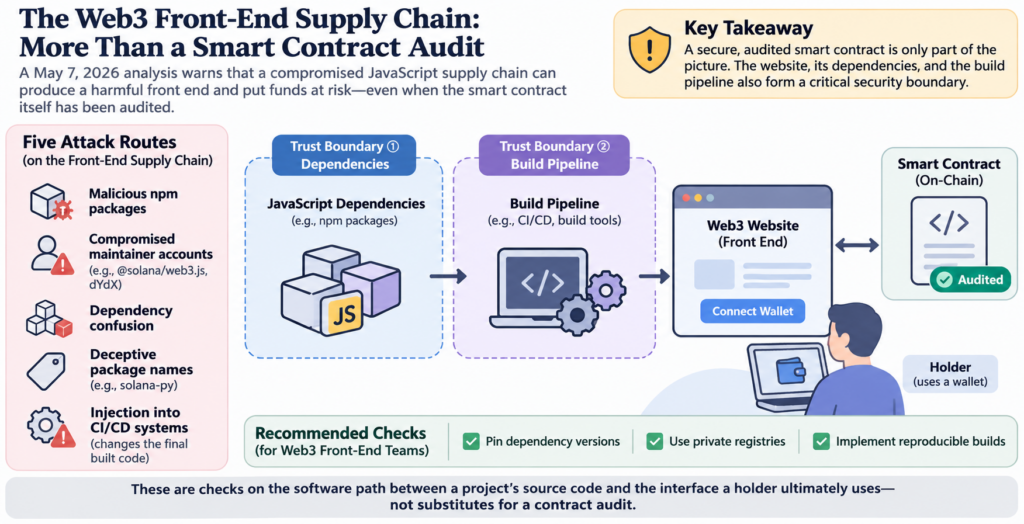
For a long-term holder, a secure smart contract is only part of the picture. The website used to interact with it also depends on JavaScript packages and a build pipeline. A May 7, 2026 analysis warns that if that supply chain is compromised, the resulting front end can put funds at risk even when the contract itself has been audited.
The analysis describes five attack routes: malicious npm packages, compromised maintainer accounts, dependency confusion, deceptive package names, and injection into CI/CD systems that changes the final built code. It cites a September 2025 case involving 18 packages associated with 2 billion weekly downloads; maintainer-account incidents involving @solana/web3.js and dYdX; and solana-py as an example in its discussion of package-name phishing. Those examples should not be read as a claim that every download led to a loss.
For teams maintaining a Web3 front end, the analysis recommends pinning dependency versions, using private registries and implementing reproducible builds. These are checks on the software path between a project’s source code and the interface a holder ultimately uses—not substitutes for a contract audit.