For anyone tracking the security of assets held with a custodian, the distinction between frozen funds and recovered funds matters. As reported on November 19, 2026, a court filing provided a fuller account of the assets taken in the October 29 Binance hack, but it did not establish that the frozen assets had been returned.
An asset schedule submitted by Nest Clearing and Custody Limited, which operated the affected Binance wallets, listed 192 cryptocurrencies across 11 blockchain networks. The schedule appeared in an Abu Dhabi court order shared with Cointelegraph and valued the stolen assets at about $6.3 billion at the time of the theft.
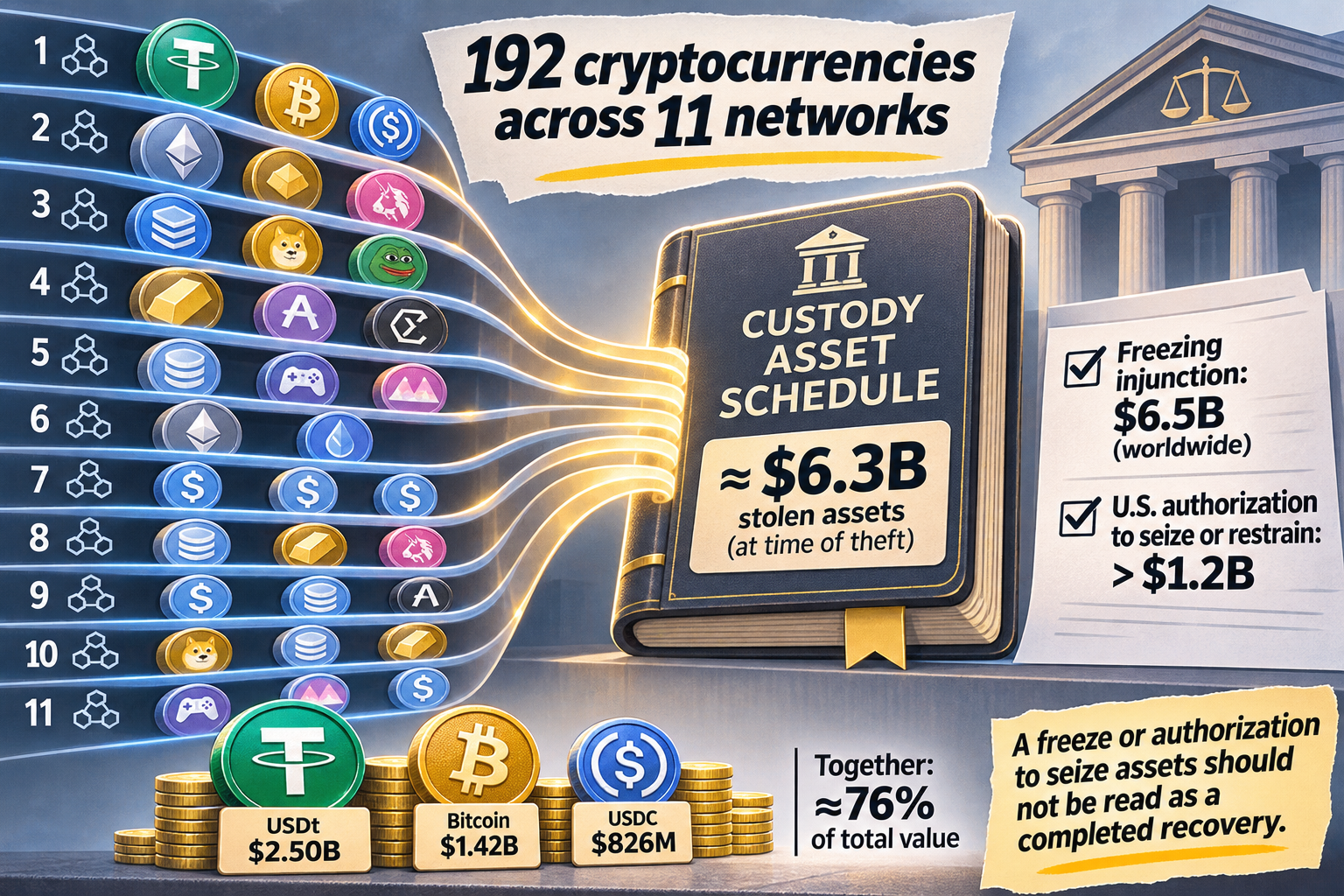
Tether’s USDt accounted for $2.50 billion of that value, followed by $1.42 billion in Bitcoin and $826 million in Circle’s USDC. Together, those three assets represented about 76% of the total. Cointelegraph’s analysis of the schedule put fiat-linked stablecoins at at least $3.46 billion, or 55% of the stolen value. Nine other fiat-linked stablecoins—RLUSD, USD1, USDE, FDUSD, USDS, XUSD, BUSD, USDP and EURI—were worth a combined $132.4 million at the time of the theft.
The schedule also listed $37.9 million in memecoins, chiefly Pepe ($34.9 million) and Shiba Inu ($2.3 million); $58 million in tokenized gold; and more than $5 million across five gaming and metaverse tokens. It recorded about $73.5 million in Wrapped Beacon ETH and $97.4 million across UNI, ENA and AAVE. Ethereum was the largest network by value, accounting for roughly 60% of the stolen assets; that figure does not mean Ether itself made up 60% of the haul.
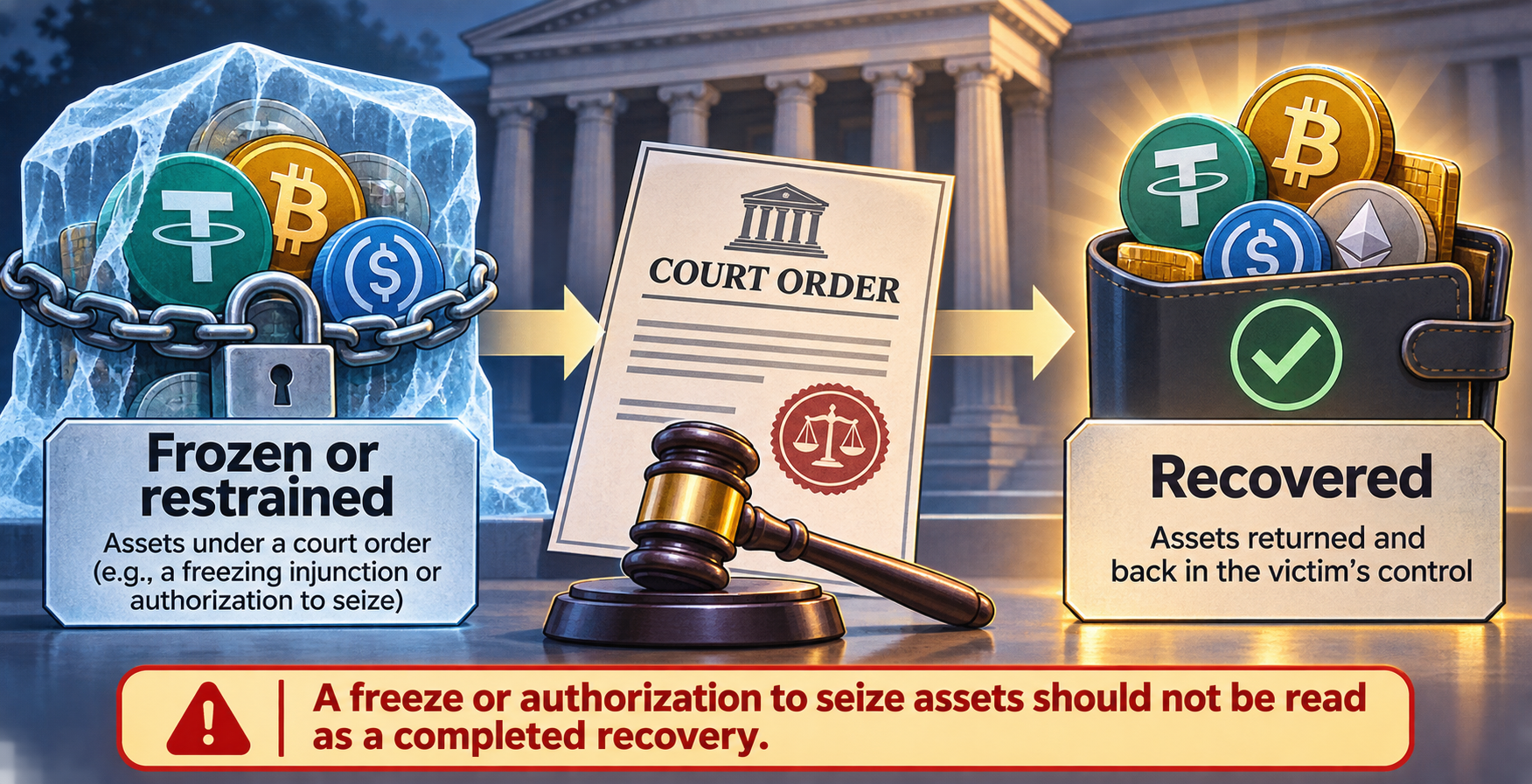
The legal process was still underway at the time of the report. Cointelegraph had previously reported that the Abu Dhabi Global Market Courts issued a $6.5 billion worldwide freezing injunction against unidentified people accused of carrying out the attack. The order restricted dealings in assets up to that amount and required sworn disclosure by November 30 of worldwide assets worth more than $50,000. A separate order required 18 named firms, including Circle and BitGo Bank & Trust, to maintain existing freezes on assets linked to the hack. Court documents said the court would consider on December 1 whether to extend the injunction and whether the firms must hand over frozen assets.
The US Department of Justice said it had obtained authorization to seize or restrain more than $1.2 billion of the stolen cryptocurrency. According to the department, that authorization covered part of the more than $2.7 billion that US authorities and private-sector partners had frozen since the hack. Investigators were still working to recover additional funds. A freeze or authorization to seize assets should not be read as a completed recovery.