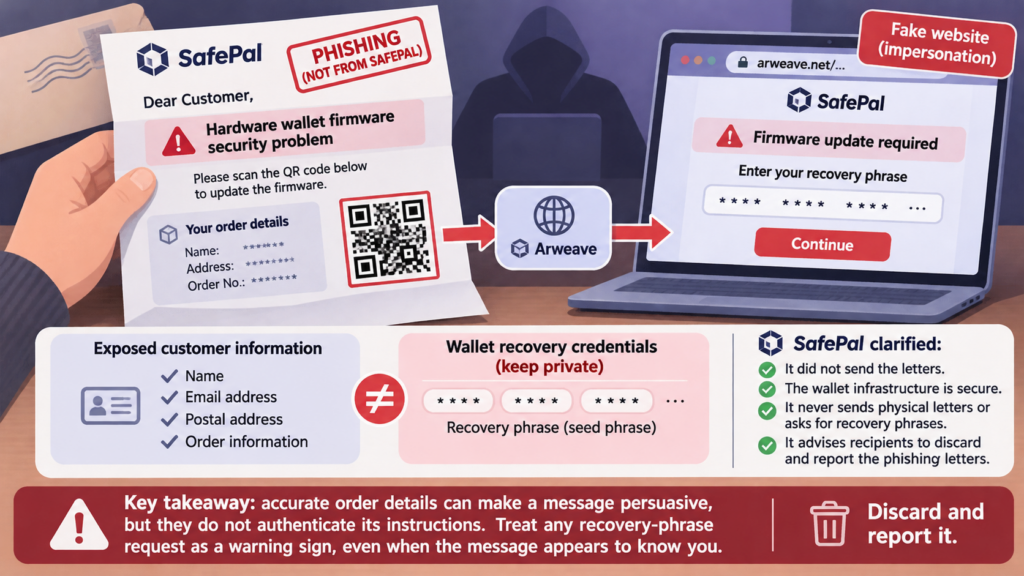
A letter that names your wallet order may look credible, but it is not a reason to scan a QR code or share a recovery phrase. As reported on November 13, 2026, some SafePal customers in Italy had received physical phishing letters following an earlier customer-data breach.
According to Criptovaluta.it, the letters impersonated SafePal, claimed there was a hardware-wallet firmware security problem, and used a QR code that led via Arweave to a fake website. They included recipients’ real names, addresses and order information.
From March 2025 to April 2026, a problem with SafePal’s order-tracking plugin exposed names, email addresses, postal addresses and other data belonging to nearly 40,000 customers. SafePal confirmed that it did not send the letters. The company said its wallet infrastructure was secure, that it never sends physical letters or asks for recovery phrases, and advised recipients to discard and report the phishing letters.
The practical distinction is between exposed customer information and control of a wallet: accurate order details can make a message persuasive, but they do not authenticate its instructions. Treat a recovery-phrase request as a warning sign, even when the message appears to know you.