If you hold crypto for the long term, keeping control of your keys does not necessarily keep your financial activity private. A public blockchain can let anyone verify transactions while also exposing details you may not expect others to see. The question is not simply whether a network offers “privacy,” but which information it hides, from whom, and at what point in a transaction.
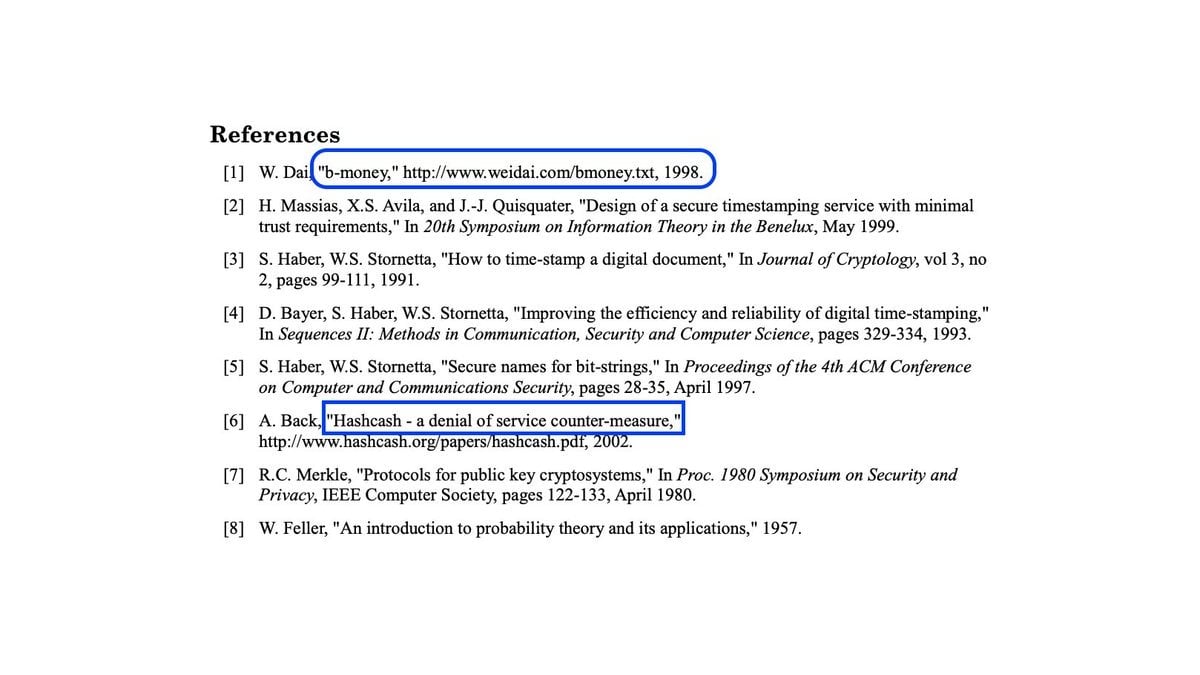
This distinction is central to a discussion of blockchain privacy published on November 16, 2026. It begins with a limitation Satoshi Nakamoto acknowledged in Section 10 of the 2008 Bitcoin white paper: Bitcoin makes transactions public and relies instead on public keys that are not directly tied to real-world identities.
Bitcoin addresses are pseudonyms, not secrets
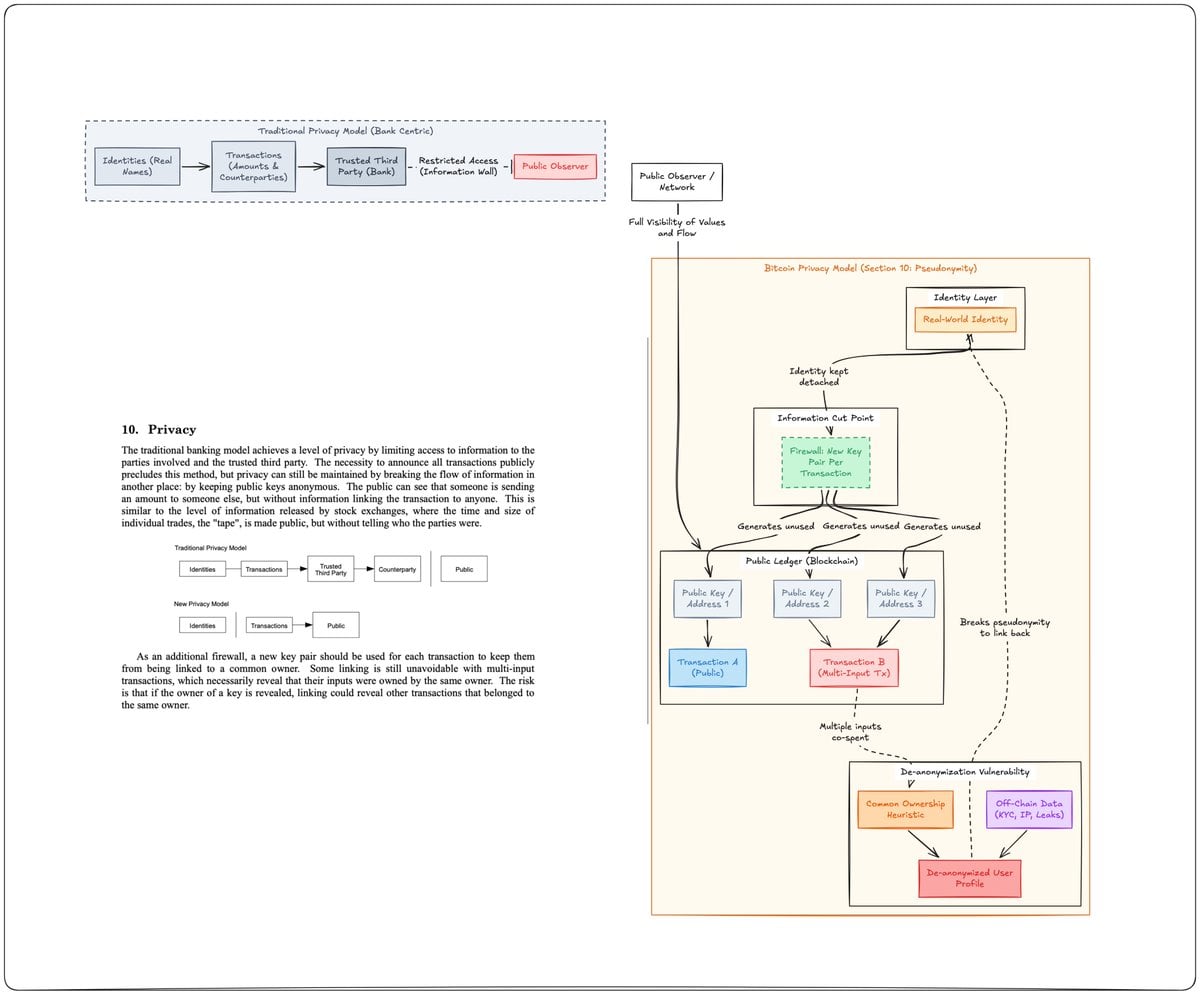
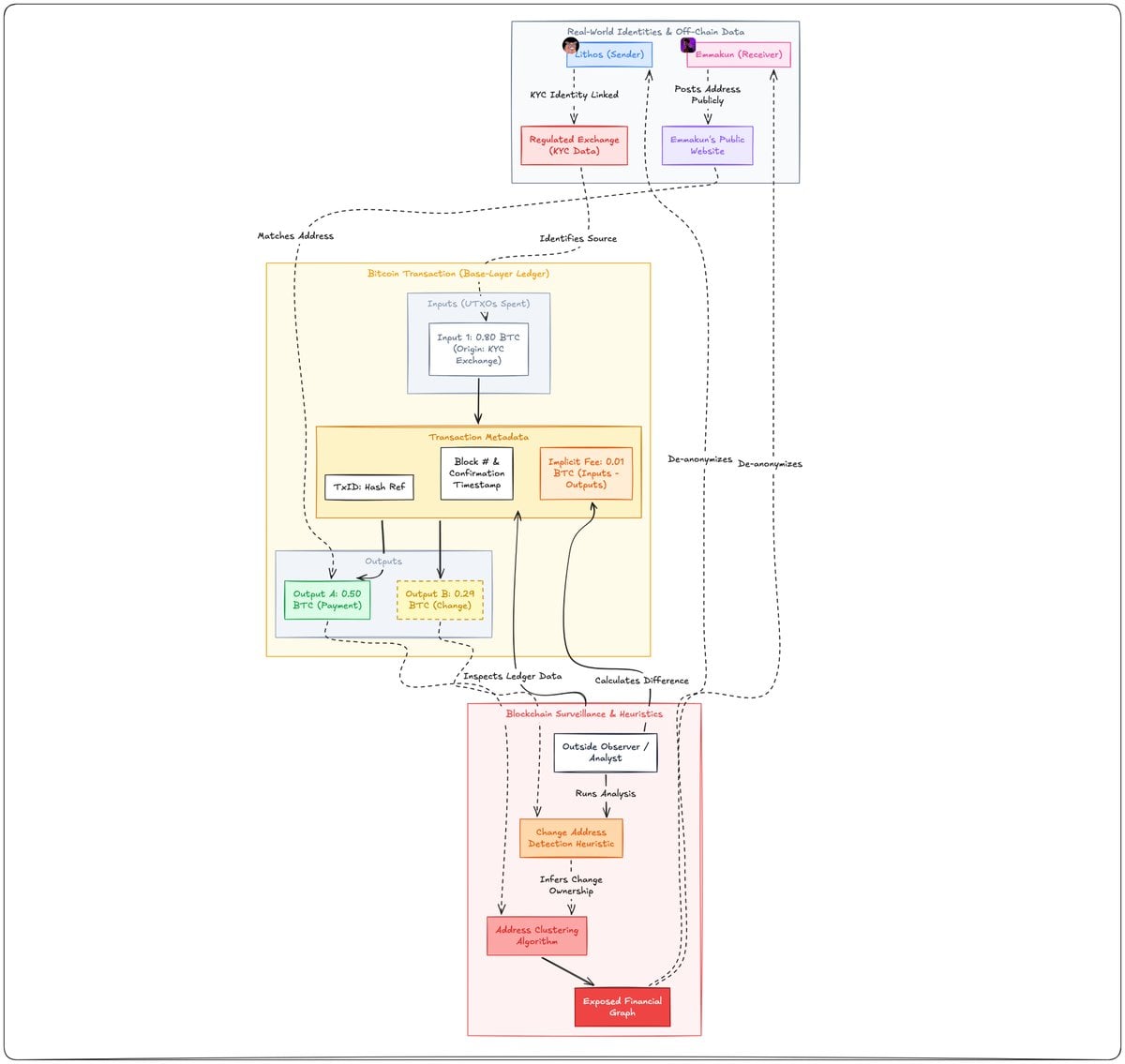
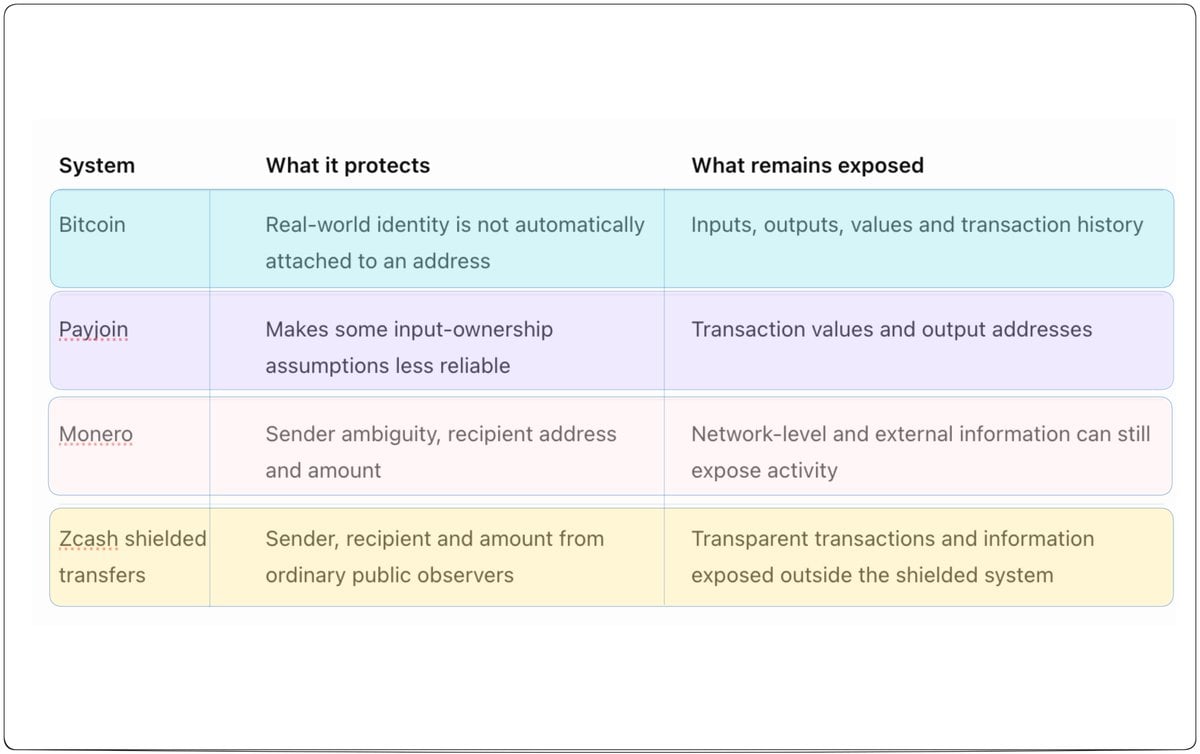
A Bitcoin transaction reveals the inputs it spends, its outputs and their amounts, and the block in which it is confirmed. An observer may not initially know who controls an address. But if an address becomes associated with a person—through an exchange account or a publicly posted donation address, for example—other activity may become easier to investigate.
Nakamoto suggested using a new key pair for each transaction to make payments harder to link. That does not make transaction details confidential. Analysts also use assumptions about shared inputs and change outputs to trace funds, though those assumptions are not always correct. Payjoin, defined in BIP 78, illustrates a limitation of one common assumption: the recipient contributes an input to a payment, so its inputs need not all belong to the sender. Payjoin complicates that analysis; it does not hide amounts or turn Bitcoin into a confidential-payment system.
Different designs protect different details
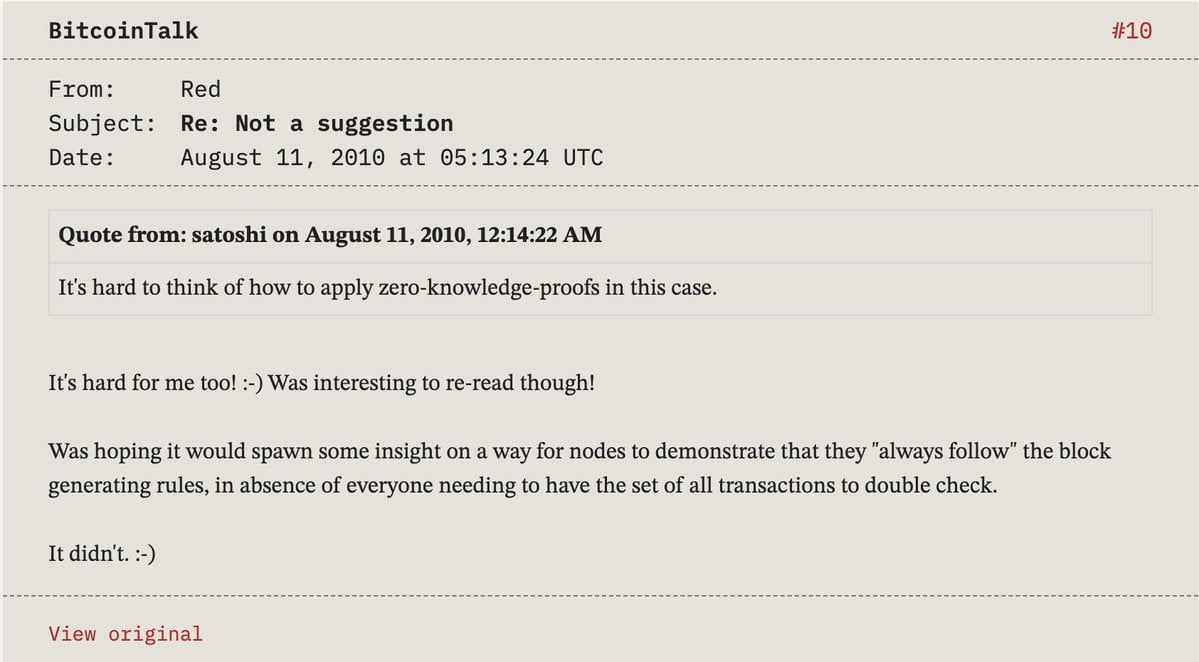
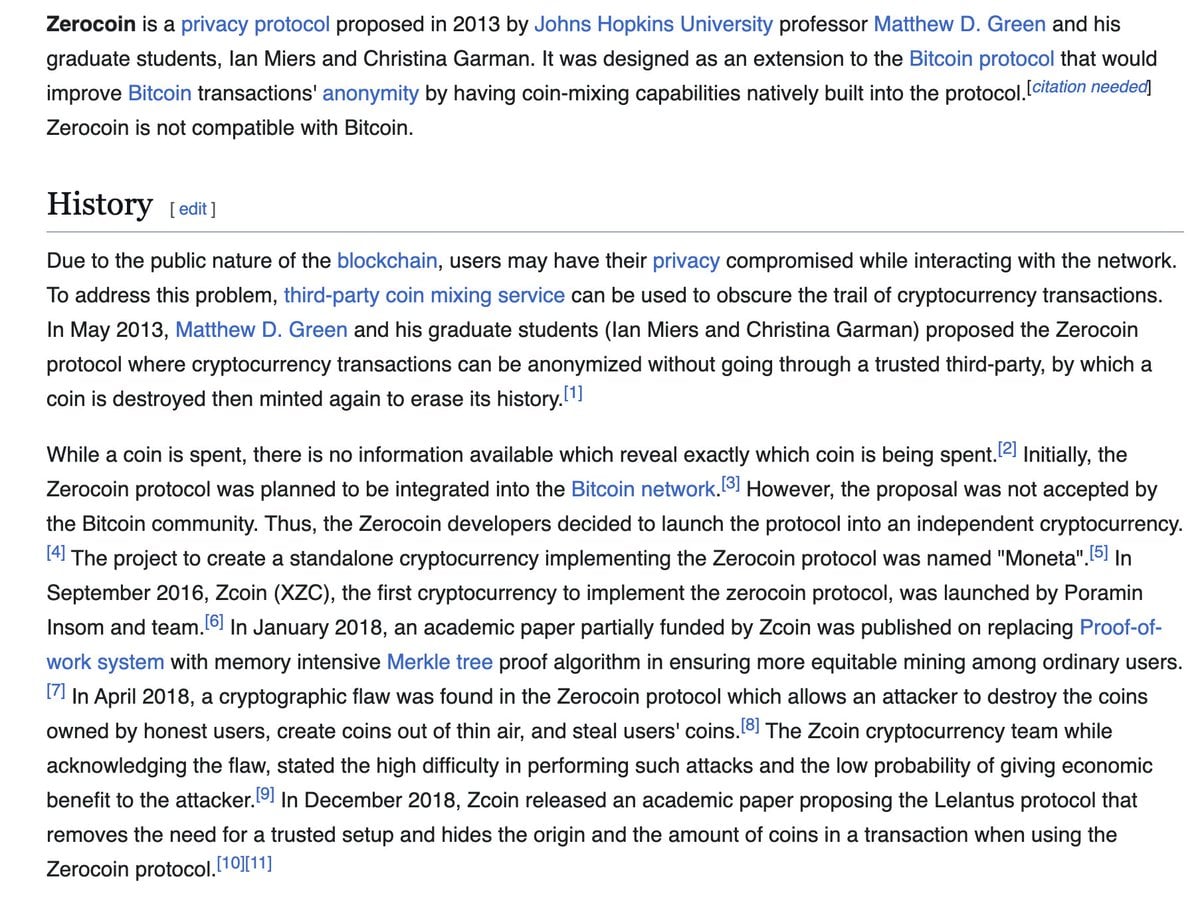
The search for private digital payments predates Bitcoin. David Chaum’s 1982 work on blind signatures examined payments that an issuer could not link to their eventual use, although that model still relied on a central issuer. Later, the 2013 Zerocoin paper explored breaking links to a payment’s source, while the 2014 Zerocash work used zero-knowledge proofs to develop a way to hide sender, recipient and amount while allowing verification.
Today’s systems make different trade-offs:
- Monero uses ring signatures, stealth addresses and RingCT to obscure spending, receiving and amounts. The source notes that sender privacy remains sensitive to the ring’s properties and information available to observers. Its use of Dandelion++ to reduce network-broadcast traceability does not eliminate network-level surveillance.
- Zcash supports shielded transactions that conceal key payment details on the public ledger. It also supports transparent addresses, whose activity remains visible. Movement between transparent and shielded pools, wallet support and the size of the anonymity set affect the privacy a user actually gets. Viewing keys allow selected transaction details to be disclosed without handing over spending authority.
- Aztec combines private functions executed in a user’s local private execution environment with public functions executed by network participants. Local execution does not, by itself, prevent a remote node from learning what data a client queries.
- Oasis Sapphire runs confidential contracts using trusted execution environments. That approach introduces trust assumptions about the hardware and its implementation, rather than relying on the same assumptions as a client-generated zero-knowledge proof.
- Umbra V2 focuses on confidential transfers within a shielded pool on Solana. Deposits and withdrawals can still reveal timing and amount clues. Privacy Pools uses zero-knowledge proofs to let a withdrawal demonstrate membership in a screened set without identifying its particular deposit; the described design does not rely on a central KYC process or a global viewing backdoor.
These are not interchangeable guarantees. Hiding a recipient is different from hiding an amount, and concealing on-chain activity does not automatically conceal network traffic or wallet queries.
Check what the wallet reveals before a transaction
A wallet may ask a remote RPC service for balances, transaction history, simulation results or token information. Those requests can tell the service which address the user is interested in—even if a later transaction uses a privacy-preserving protocol. The Ethereum wallet and SDK initiative Kohaku aims to address this boundary; the source describes private information retrieval as an approach that would let a wallet request account data without revealing the particular account being queried.
For a holder assessing a wallet or privacy feature, a manageable first check is to ask what a remote service can learn when the wallet opens and refreshes, separately from what the blockchain records when funds move. Neither a confidential transaction nor a private query protects a compromised device, and no single feature removes every disclosure risk. Privacy depends on the full path from wallet and network connection to application and public ledger.