November 25, 2026, 21:14 UTC+8
SBI Holdings, Sumitomo Mitsui Financial Group (SMFG) and the Solana Foundation announced on November 25 that SBI Solana Global had begun full-scale operations in Japan. The partners completed agreements to restructure SBI R3 Japan, which now operates under the new name. On July 13, the Solana Foundation had agreed to take a stake in the company.
Solana said SBI Holdings and SMFG have $2.3 trillion in combined assets and more than 80 million customers. The asset figure describes the two financial groups, not an investment in the venture.
What the venture plans to build
SBI said the company would start in Japan before expanding across Asia and connecting to global on-chain markets. It identified four business lines:
- Stablecoin payments, including micropayments by AI agents.
- Tokenization of bonds, investment funds and loan receivables.
- Tokenization of commodities and other real-world assets.
- On-chain asset management.
SBI also has longstanding ties to Ripple. It owns about 9% of Ripple Labs and 60% of their joint venture, SBI Ripple Asia. SBI Remit uses XRP for transfers from Japan to the Philippines. Ripple was not one of the three parties that announced the Solana venture.
Separately, Binance opened spot trading against USDT for five tokenized exchange-traded funds it calls bStocks. One, IBITB, is linked to BlackRock’s iShares Bitcoin Trust. The other four are SOXXB, IGVB, ARTYB and FRHCB.
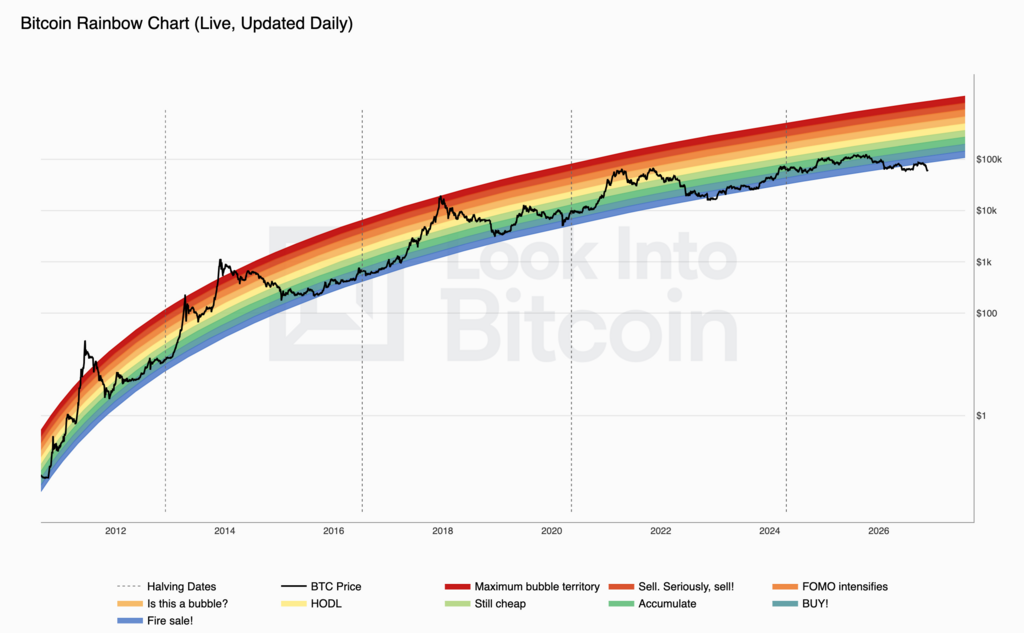
Bitcoin trades below the Rainbow Chart’s lowest band
The LookIntoBitcoin Rainbow Chart shared on November 25 showed Bitcoin’s price below the lowest colored band of the long-term price model. Bitcoin traded near $58,580 that morning, down 1.97% over 24 hours, according to TradingView. It had fallen to $55,150 on November 21, its lowest price since September 2024. BitMEX co-founder Arthur Hayes predicted a retest of $55,000; that was his forecast, not a price target established by the chart.
U.S. spot Bitcoin ETFs recorded $231.56 million in net outflows on November 24, their sixth consecutive trading day of withdrawals, according to SoSoValue. U.S. spot Ether ETFs recorded $64.02 million in net outflows that day. CryptoQuant’s Coinbase Premium Index had been negative for 63 consecutive days, indicating that Bitcoin traded at a discount on Coinbase relative to global exchanges.
Glassnode reported that Bitcoin’s hashrate was down 8% year over year, its first annual decline since China banned mining in 2021. Hashprice, a measure of revenue per unit of mining power, reached a record low. Strategy’s market capitalization fell to $35.7 billion, compared with about $51.3 billion in Bitcoin on its balance sheet.
Ether trading and Ethereum’s security roadmap
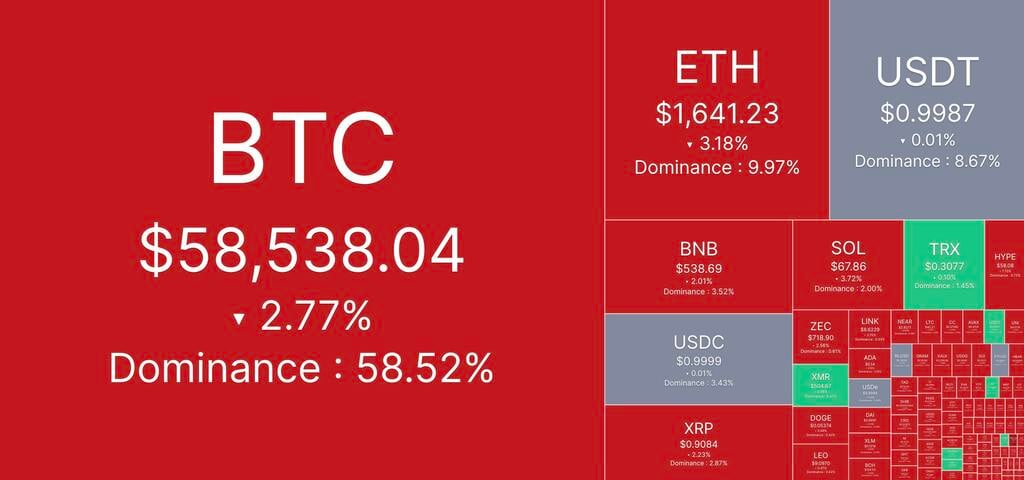
Ether traded at $1,641 on the morning of November 25, down 3.18% over 24 hours, according to CoinMarketCap. Alphractal CEO Joao Wedson reported that orders below $1,000 accounted for $132 million in net buying since the September 21 peak. Over the same period, orders of $100,000 to $1 million accounted for $4.29 billion in net selling, and orders above $1 million accounted for another $2.5 billion in net selling.
The Ethereum Foundation also published its PQAI #1 roadmap for protecting the network against quantum computing threats. The roadmap sets out developers’ choice of the Keccak-256 hash function over faster alternatives such as Poseidon2 and BLAKE3. It describes a design decision, not an activated network upgrade.
Ripple custody in Türkiye and Tether’s reserve buffer
Ripple said Turkish bank Yapı Kredi uses Ripple Custody for its Yapı Kredi Kripto platform. According to the bank’s filing on the KAP disclosure platform, Türkiye’s Capital Markets Board approved its application to operate as a crypto asset custodian in June.
Tether faced an estimated $4.7 billion in unrealized losses on its Bitcoin and gold reserves. Its excess reserve buffer had shrunk by almost 60% since September 30. Separately, a Bloomberg investigation reported that Tether had asked some hack victims for fees of up to 20% to return frozen USDT.