For holders who sign transactions with a cold key, the important question is whether an offline-signing workflow will still work if Solana removes durable nonces. An article published on November 13, 2026, explains the planned move away from durable nonces and compares two on-chain signing alternatives. It does not say the removal has already taken effect.
The article identifies three reasons for the change: special runtime logic associated with durable nonces creates replay vulnerabilities, obstructs asynchronous execution, and can be exploited by spam transactions during congestion.
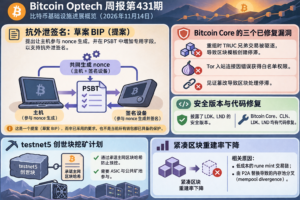
The proposed alternative uses an on-chain offline-signing program with a CPI Passthrough pattern. A cold key signs offline; a hot wallet pays the transaction fee and submits the transaction. The program verifies the signature and advances its own nonce. That division of roles may be useful for custody planning, but it does not remove the need to check how a particular wallet and application implement the workflow.
The article compares Anza Programmatic Signer and Blueshift Vector across signature coverage, hardware-wallet compatibility, key types, PDA management, concurrent messages, and tooling. It also walks through an offline SOL transfer with each. Before relying on either approach, holders and application developers should check the compatibility points the article flags: stack height, instruction introspection, and Token-2022 CPI Guard. These are migration considerations, not a claim that either option works with every existing setup.