If you hold bitcoin and are weighing a loan against it, the first question is who controls the coins while the debt is open, and what you would have to do if the price falls before you repay. Cash you do not have to raise by selling is only one side of that choice.
A November 23, 2026 report said Cross River Bank had launched its first bitcoin-backed loans with consumer lender LendingUSA. Eligible borrowers can seek between $10,000 and $250,000 against bitcoin without selling it. According to The Block, this is the first time Cross River has originated bitcoin-secured loans itself. LendingUSA runs the application platform. According to LendingUSA, every loan is made by Cross River, a New Jersey state-chartered bank.
How much cash the pledge unlocks
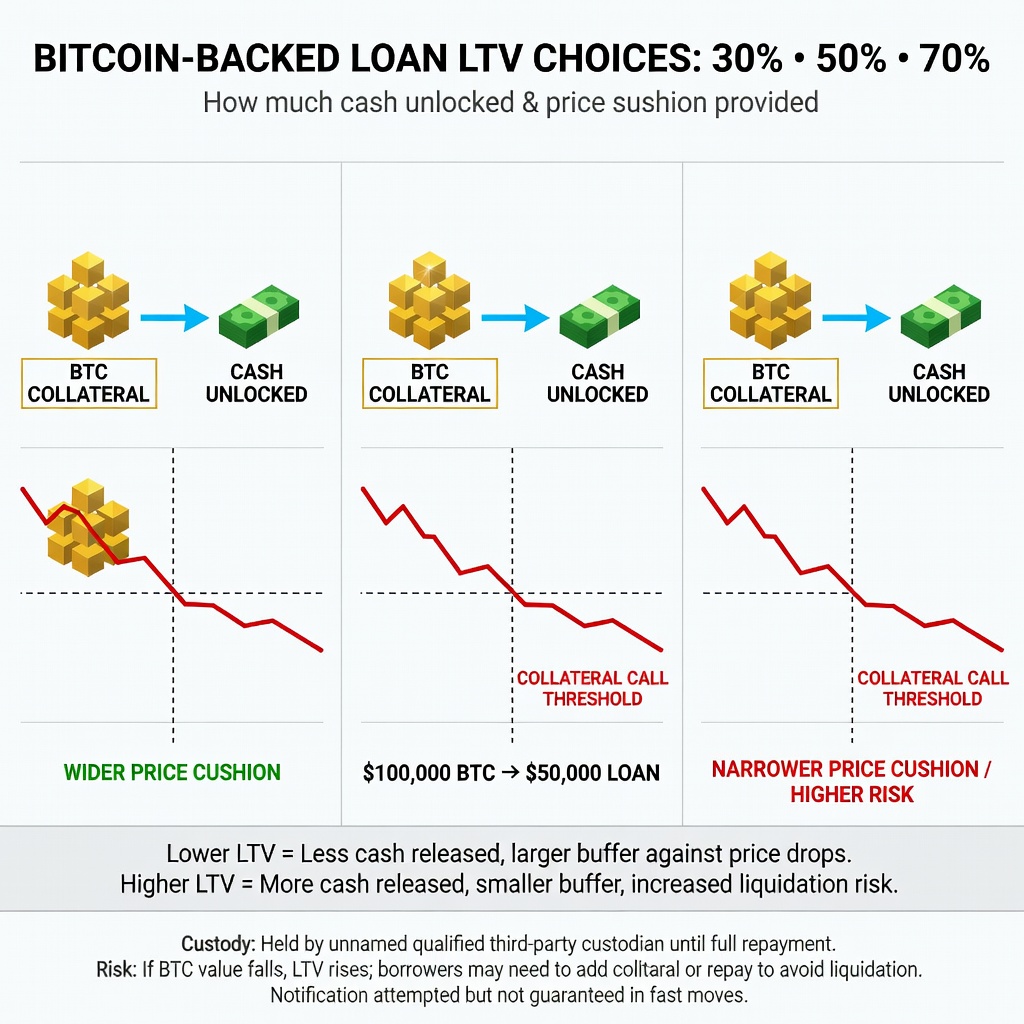
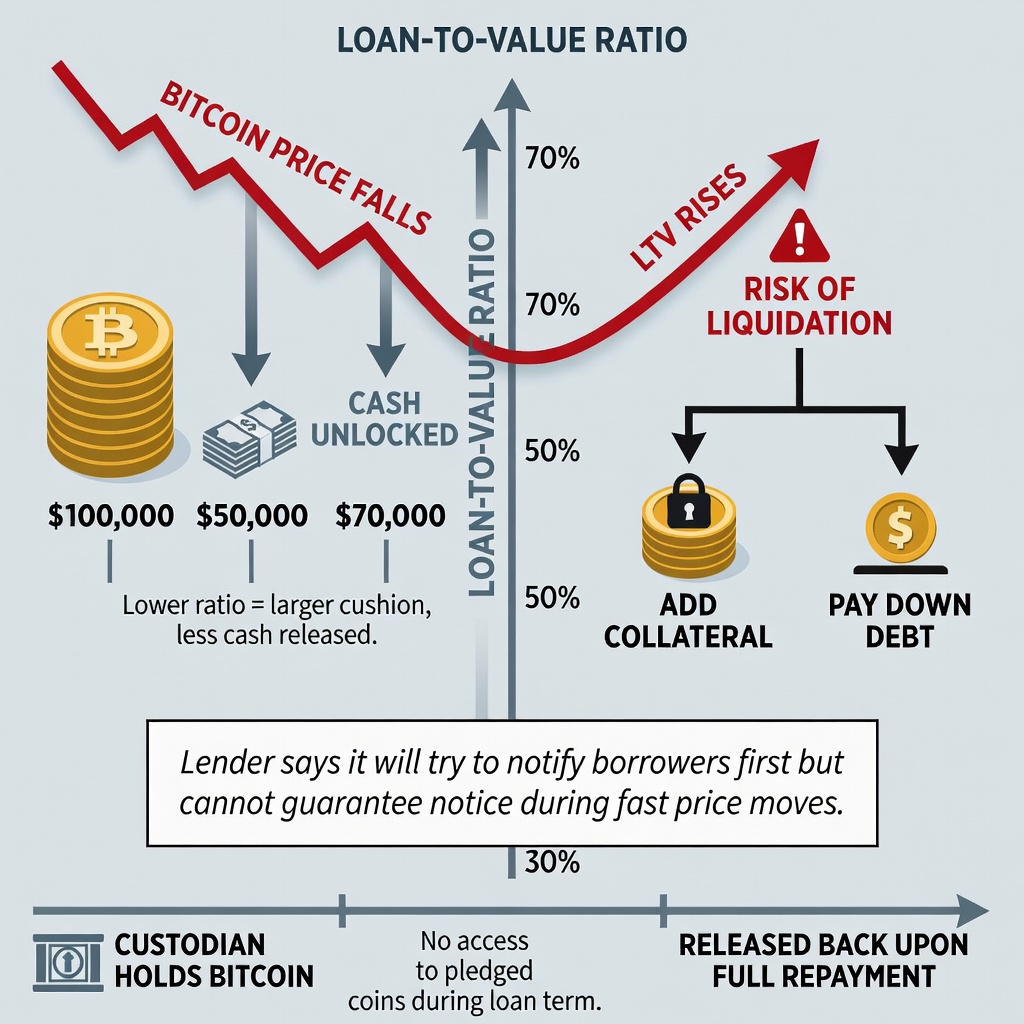
Borrowers can choose a loan-to-value ratio of 30%, 50%, or 70%. LendingUSA defines that ratio as the loan balance divided by the value of the collateral. On that definition, a 50% loan against $100,000 of bitcoin would be $50,000. A lower ratio leaves a larger cushion if the price drops, and it also releases less cash for each bitcoin pledged. A higher ratio does the opposite.
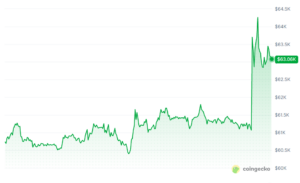
The same report noted that bitcoin was trading near $61,000 on Monday morning, November 23, 2026. At that price, a borrower at the 70% tier would have far less room before a collateral call than one at the 30% tier.
When the money comes back
Two repayment options are offered. On an interest-only loan, smaller monthly payments roughly cover interest, and the principal plus any remaining interest is due at the end of the term. On a no-monthly-payment loan, the full balance plus interest is due at the end. LendingUSA says borrowers can repay early without penalties or fees.
LendingUSA’s page says rates and terms vary by applicant, and that the loan amount, interest rate, and terms are disclosed once an application is received. The page lists the product’s maximum loan-to-value at 70%, and every loan on it is made by Cross River Bank. The report does not state a fixed interest rate or a standard term length.
Applicants go through a soft credit check. LendingUSA says approval rests on the crypto being pledged rather than on a credit score, and that funding typically arrives within one to three business days after the collateral is verified. Those are the company’s descriptions of its process, not a promise that a given application will be approved or funded on that timetable.
Who holds the bitcoin
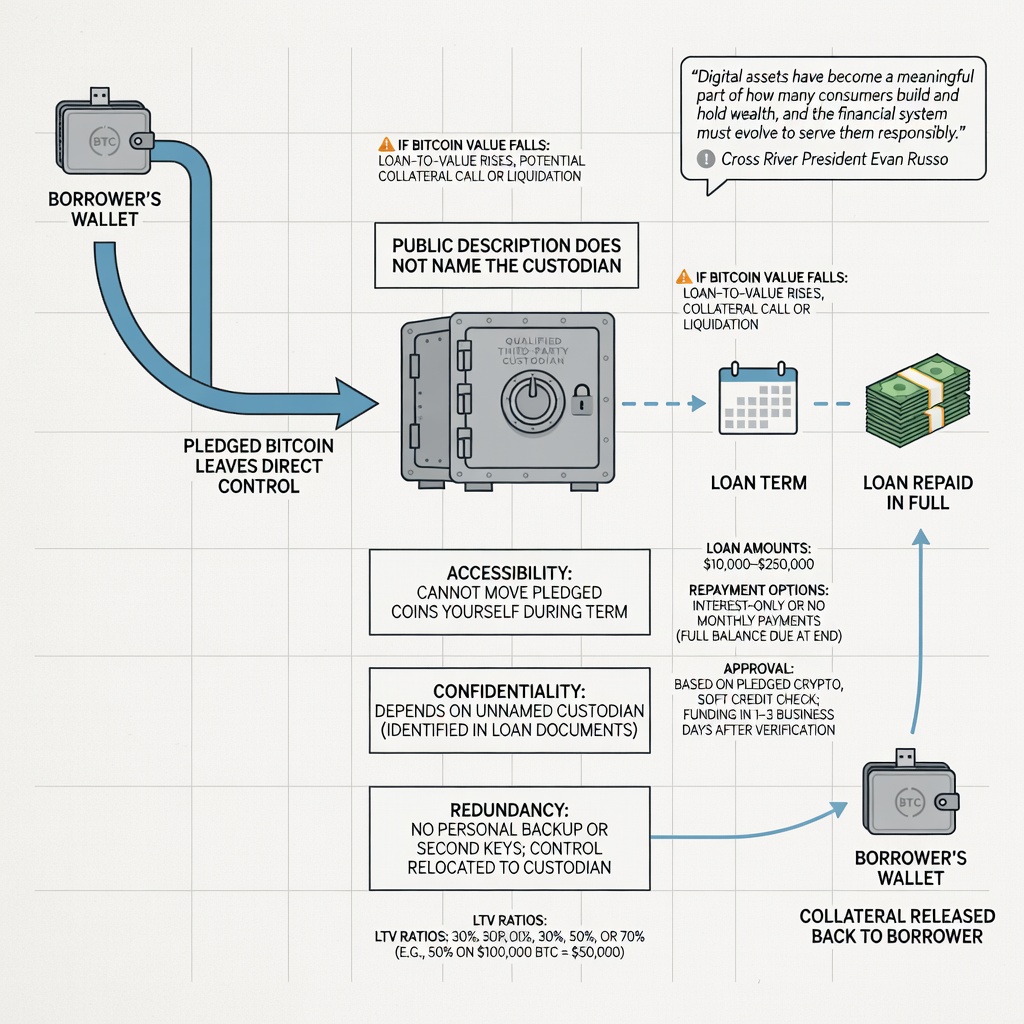
A qualified third-party custodian holds the bitcoin for the life of the loan. The report does not name that custodian. Once the loan is repaid in full, the collateral is released back to the borrower, according to the company.
For someone used to holding their own keys, that is the trade-off. Accessibility changes for the whole term: you cannot move the pledged coins yourself. Confidentiality depends on a custodian the public description does not name, so the loan documents are where that party would have to be identified. Redundancy, in the ordinary sense of your own backup or a second set of keys, is not part of the arrangement the report describes. One outside holder keeps the coins until full repayment. That setup does not remove risk. It relocates control until the debt is closed.
Before pledging anything, the details worth checking against the actual offer are the ones the launch leaves open or conditional: which custodian would take the coins, which of the three ratios you are being offered, whether payments are interest-only or deferred entirely, and the rate and term that appear only after an application. Nothing in the reported terms asks you to share seed phrases or wallet secrets with the lender in the public description of the product.
If the collateral falls in value
The terms carry the usual risk of borrowing against a volatile asset. LendingUSA says that if the value of the bitcoin falls, the loan-to-value ratio rises, and borrowers may be asked to add collateral or pay down the debt to avoid liquidation. The company says it will try to notify borrowers first, but it cannot guarantee notice during fast price moves. The report does not give any count of liquidations, pledged bitcoin, or losses for this program. Those outcomes are described as conditions of the loan, not as figures that have already been measured.
What the companies say the product is for
LendingUSA markets the loans for uses such as debt consolidation, home improvements, and large purchases. The company says it has served more than 200,000 borrowers across its lending business, and that the crypto product is its first expansion into digital asset-backed loans. That borrower figure is about the firm’s broader lending business, not a count of bitcoin-backed loans.
Cross River President Evan Russo framed the launch, in a statement, as an extension of the bank’s existing work. “Digital assets have become a meaningful part of how many consumers build and hold wealth, and the financial system must evolve to serve them responsibly,” he said. He added, “Cross River was built on the belief that innovation and trusted infrastructure go hand in hand,” and, “Launching our first Bitcoin-secured lending program as the loan originator is a natural extension of that mission.”
The report described the move as adding a state-chartered bank to a lending market that has been moving closer to traditional finance. In August 2026, Coinbase and Better Mortgage announced general availability of bitcoin-backed mortgages. In April 2026, Strike’s Jack Mallers announced lending proof-of-reserves and loans designed to withstand volatility. The report said neither company had said how much bitcoin had been pledged so far or which custodian held the collateral.