For anyone holding funds in an LNbits wallet, the concern in this report is not just whether the software has been updated: LNbits warned that credentials compromised before an update could still give an attacker access afterward.
In its report published November 11, 2026, at 09:16 UTC+08:00, Cointelegraph said LNbits had released version 1.7.0 on Tuesday, November 10, after reporting attacks on LNbits instances and stolen funds. LNbits described the release as critical, saying the vulnerability affected all earlier versions and put funds at risk. The release also strengthened authentication, extension management and payment handling.
LNbits had first told operators on Sunday, November 8, to disable its Paywall extension while it investigated a potential vulnerability. Just over an hour later, it urged users to shut down their LNbits servers immediately, citing a wave of attacks, and took its own hosted installations offline.
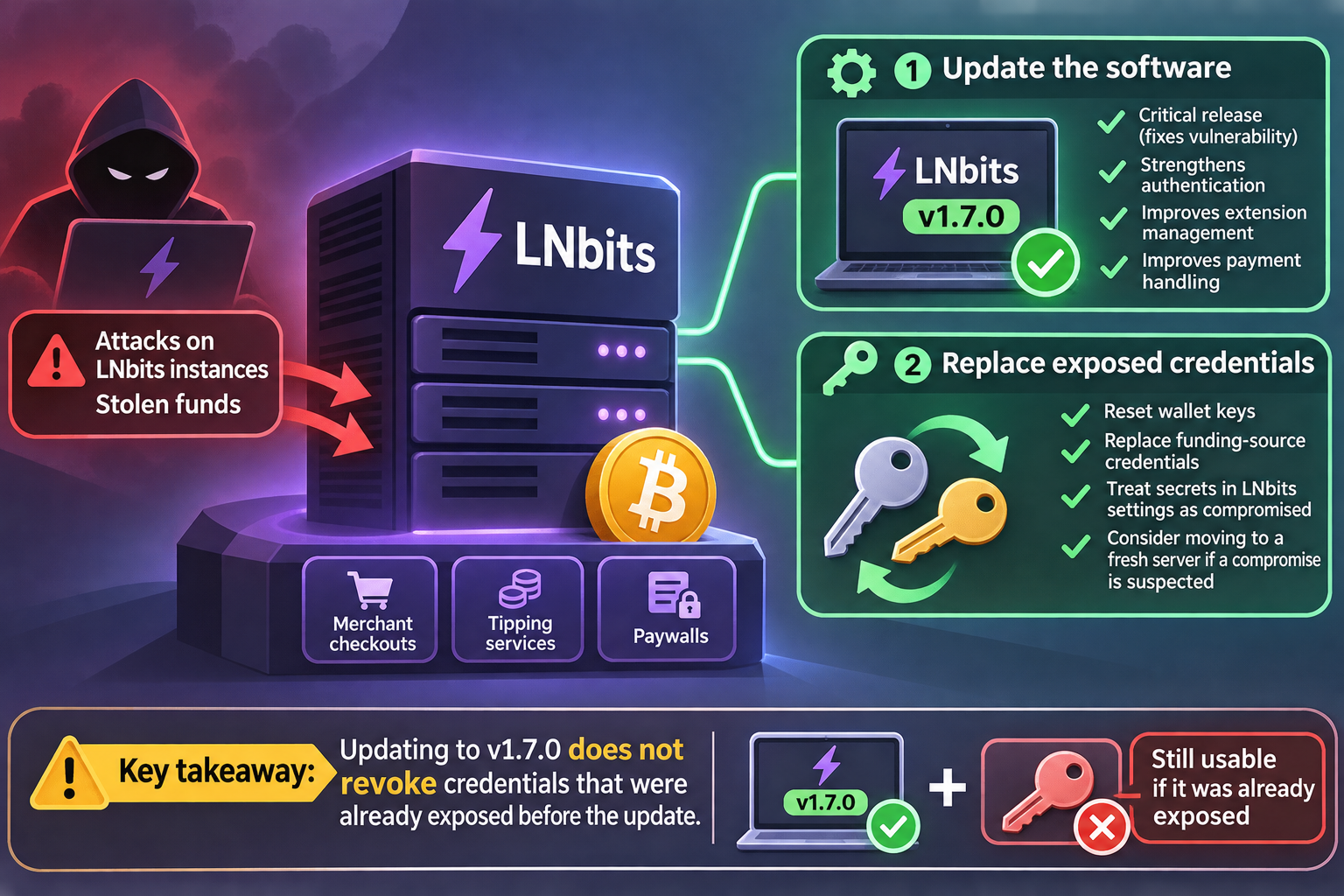
The project’s guidance went beyond updating. LNbits urged operators to reset wallet keys, replace funding-source credentials and treat secrets stored in LNbits settings as compromised. It recommended moving to a fresh server if a compromise was suspected. Those steps address the separate risk of credentials exposed before the patch; an update alone would not invalidate them.
LNbits had not yet explained the exploit or established how many users were affected, and said a separate report would follow. One user, Kevin Ravensberg, said attackers created accounts on his LNbits instance and withdrew about 2.3 million satoshis (0.023 BTC) before he could shut down the server. That amount is his reported loss, not a confirmed total across affected users. Creator Ben Arc said on X that users and the project had suffered losses while preparing the release. Cointelegraph said it had sought comment from Arc and LNbits.
LNbits provides software for Lightning wallets and payment applications, including merchant checkouts, tipping services and paywalls. Arc said in May that about 200,000 people ran the software themselves; the report did not say how many of those installations were affected.