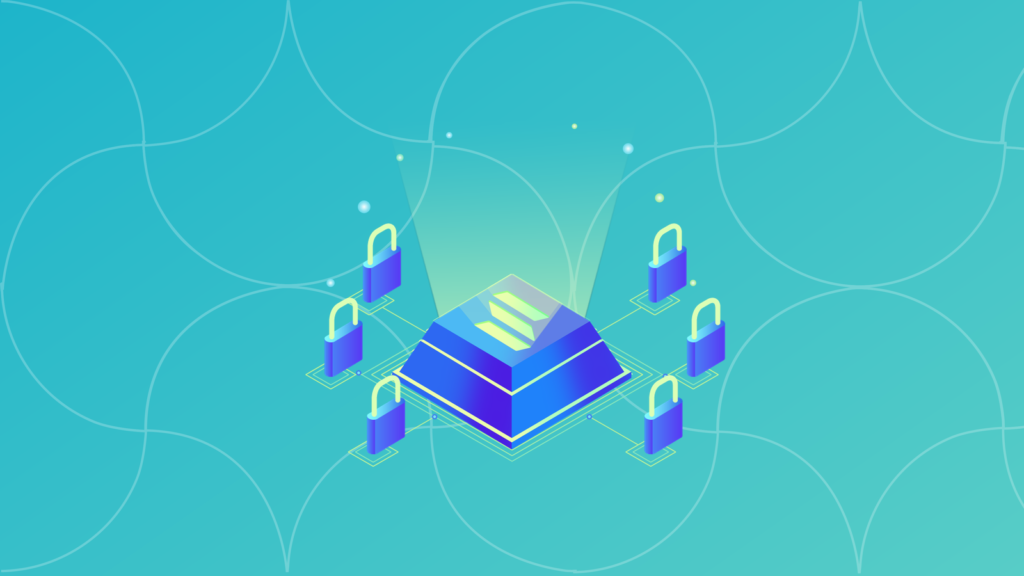
If you hold funds in a Solana wallet, anyone who knows its address can inspect its public balance and transaction history. Solana Privacy Rings offer a way to make some transfers confidential without moving to a separate network—but confidential does not mean invisible.
Helius developed Privacy Rings, which launched on Solana’s mainnet on November 10, 2026. Users can deposit tokens into a shared, shielded pool, make private transfers and withdraw to an ordinary public balance. The system supports SOL, SPL and Token-2022 tokens. According to the Solana Foundation, users retain custody: moving funds requires the owner’s signature.
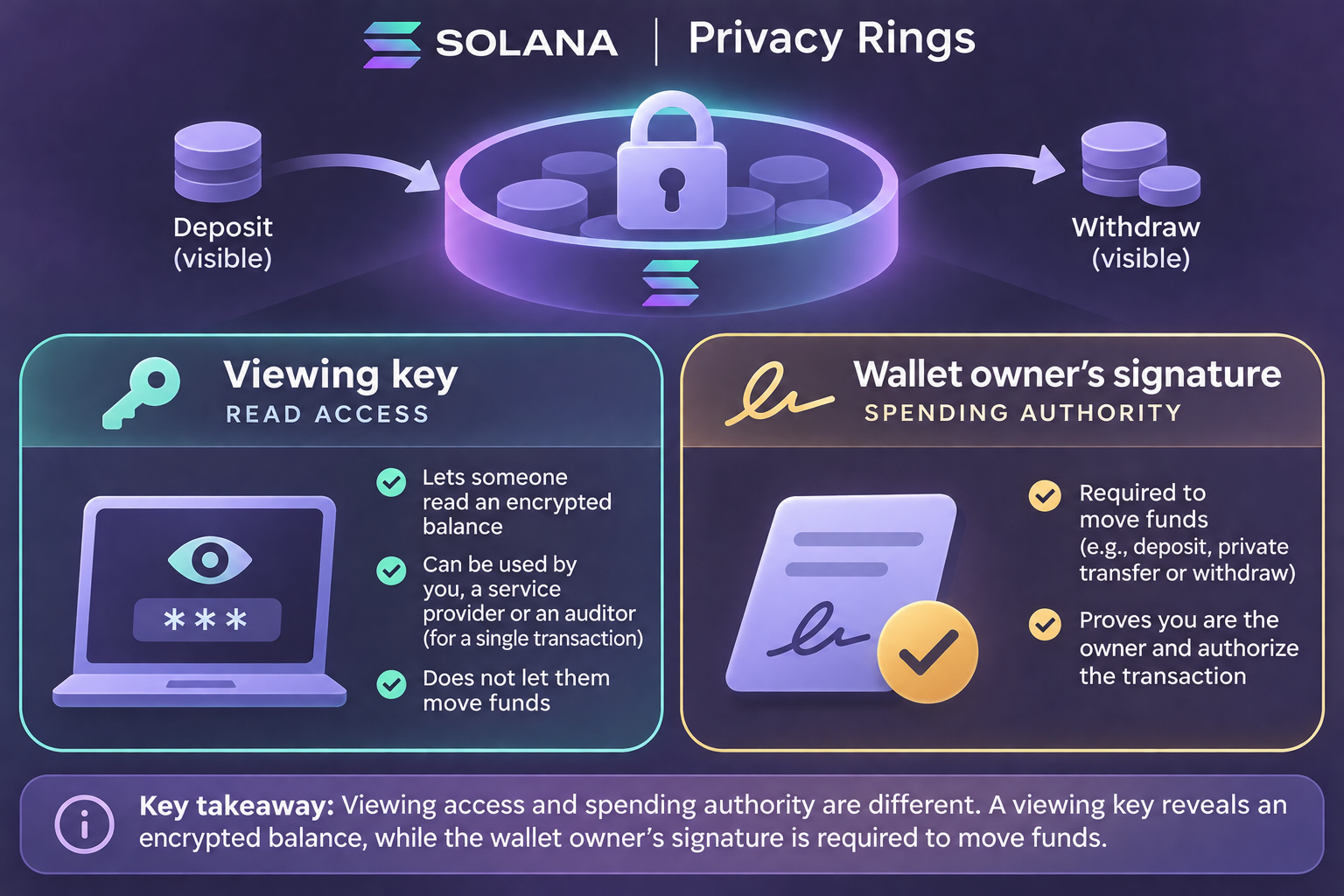
What the default Ring hides
The Default Ring, which was live on mainnet at the time of the original report, encrypts the asset and amount of a private transfer. Sender and recipient addresses remain public. Deposits from a public wallet and withdrawals back to one are also visible onchain, including their assets and amounts. Helius says a supported provider can instead bring funds from fiat directly into a private balance, keeping the asset and amount hidden from the start.
Each private transfer includes a zero-knowledge proof so the network can check its validity without seeing the encrypted figures. Helius says its Groth16 proofs can be generated either by a service provider or on the user’s device. Transfers settle in a single Solana transaction; the encrypted data remains on Solana rather than a separate layer-2 network.
For a holder, viewing access and spending authority are different. A viewing key lets someone read an encrypted balance. Users can decrypt it locally or have a service provider do so, and can share access to a single transaction with an auditor or counterparty without revealing their entire history. A viewing key is not the owner’s signature required to move funds.
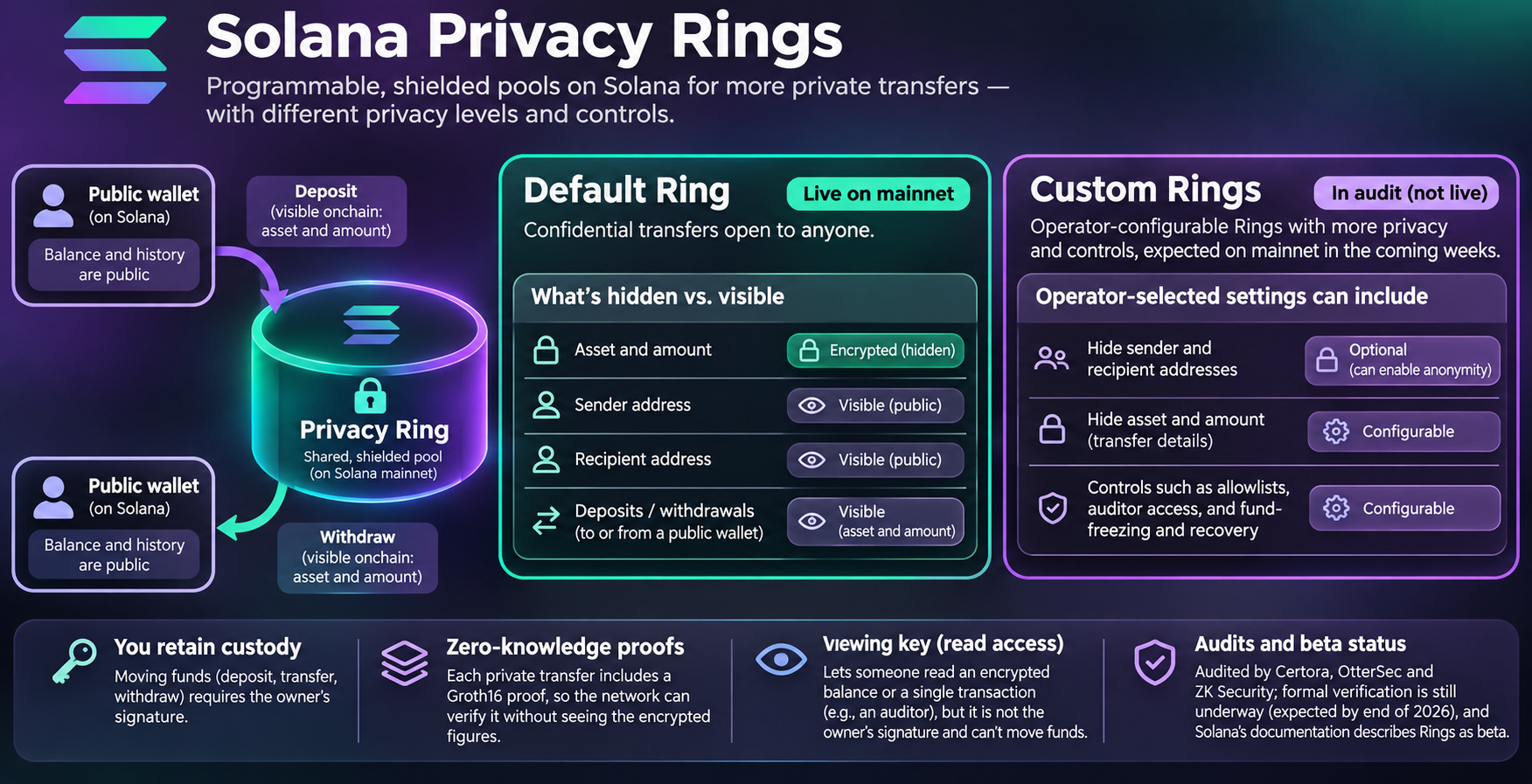
Availability and security limits
The planned Custom Rings would let operators choose additional settings, potentially hiding sender and recipient addresses as well as transfer details. They could also include controls such as allowlists, auditor access, and fund-freezing and recovery capabilities. The Solana Foundation said Custom Rings were in audit and expected on mainnet in the coming weeks; they were not described as live in the original report.
Helius said Certora, OtterSec and ZK Security had audited the core programs and proof circuits. Formal verification was still underway, with completion expected by the end of 2026, and Solana’s documentation described Rings as being in beta. Those checks matter, but they are not a guarantee against every risk. The default Ring also retains visible addresses and entry and exit transactions.
Privacy Rings use zero-knowledge proofs, not ring signatures, despite the name. For anyone evaluating a custody or recovery setup, the practical first question is which information a particular Ring conceals—and which actions still require the wallet owner’s signature.
Source: decrypt.co (originally published 2026-11-12 01:09 UTC+8)